Dryer Exhaust Hose Problems: Signs, Fixes & When to Replace
Your dryer exhaust hose is more important than you might think. A damaged, kinked, or clogged vent hose not only makes your dryer work harder but creates a serious fire hazard. Learn how to spot problems early and keep your home safe.
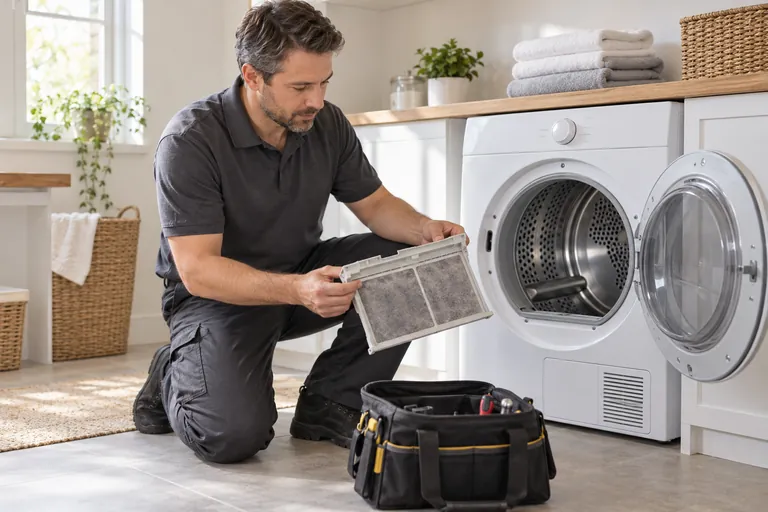
Dryer exhaust hose problems are one of the leading causes of house fires in North America. Every year, clogged or damaged dryer vents cause over 15,000 home fires, resulting in deaths, injuries, and millions of dollars in property damage. The good news? Most of these fires are preventable with proper maintenance and attention to your dryer's exhaust system.
This guide will help you identify exhaust hose problems, choose the right replacement materials, and maintain your dryer vent system for safety and efficiency.
Why Your Dryer Exhaust System Matters
The exhaust system removes hot, moist air and lint from your dryer. When this system is compromised:
- Fire Risk: Lint buildup combined with heat creates a highly flammable situation
- Energy Waste: Restricted airflow forces the dryer to work harder and longer
- Component Damage: Overheating damages the thermal fuse, thermostat, and heating element
- Carbon Monoxide Risk: Gas dryers can backdraft CO into your home
- Moisture Problems: Trapped moisture can cause mold in walls
Fire Safety Alert
Dryer fires are one of the top causes of home fires. The leading factor in these fires is failure to clean the vent system. Take exhaust problems seriously - they're not just inconvenient, they're dangerous.
Common Dryer Exhaust Hose Problems
1. Crushed or Kinked Hose
When dryers are pushed too close to the wall, the flexible transition hose gets crushed:
- Creates severe airflow restriction
- Lint accumulates at the kink point
- Common when dryers are in tight spaces
- Easy to overlook since hose is hidden
Solution: Leave at least 4-6 inches between dryer and wall. Use a periscope or recessed vent box for tight spaces.
2. Lint Buildup
Even with regular lint filter cleaning, some lint escapes into the exhaust system:
- Accumulates gradually over months and years
- Worse with long or poorly designed duct runs
- Ribbed flexible hoses trap more lint than smooth duct
- Collects at bends, joints, and the exterior vent
Solution: Clean entire vent system annually. Use smooth-walled rigid or semi-rigid duct.
3. Disconnected or Loose Hose
Vibration and time can loosen connections:
- Hot, moist air vents into your home
- Creates moisture and mold problems
- Lint accumulates behind dryer
- Often discovered when pulling dryer out
Solution: Check connections annually. Use proper clamps, not tape.
4. Wrong Hose Material
Many homes still have hazardous vent materials:
| Material | Safety Rating | Code Compliant? |
|---|---|---|
| Rigid Metal | Best | Yes |
| Semi-Rigid Aluminum | Good | Yes |
| Flexible Aluminum Foil | Poor | Sometimes* |
| Plastic/Vinyl | Dangerous | No |
*Thin foil hose may be code-compliant for short transition sections but is not recommended due to lint accumulation and damage potential.
5. Damaged or Deteriorated Hose
Exhaust hoses degrade over time:
- Thin foil hoses tear easily
- Joints separate with age
- Pest damage from rodents or birds
- Corrosion in humid environments
6. Blocked Exterior Vent
The outside vent terminal can become obstructed:
- Bird nests in spring and summer
- Snow and ice in winter
- Lint accumulation on flap
- Landscaping or debris blocking opening
- Broken or stuck flap
Warning Signs of Exhaust Problems
Watch for these indicators that your exhaust system needs attention:
Performance Signs
- Extended drying times: Clothes need 2+ cycles
- Very hot dryer: Cabinet too hot to touch
- Clothes very hot: Much hotter than normal at cycle end
- Humid laundry room: Moisture not venting outside
Physical Signs
- Burning smell: Lint getting hot or overheated motor
- Lint around dryer: Escaping from connections
- Lint at exterior vent: Accumulation around opening
- Vent flap not opening: Blocked or no airflow
Mechanical Signs
- Dryer shutting off: Thermal fuse tripping
- Error codes: Temperature or airflow errors
- Repeated thermal fuse failure: Chronic overheating
Quick Airflow Test
While the dryer is running, go outside and check the exhaust vent. You should feel a strong, warm flow of air. If the airflow is weak or the flap barely moves, your vent system needs cleaning or repair.
Choosing the Right Exhaust Hose
Best Options (Recommended)
Rigid Metal Duct
- Best airflow and safety
- Smooth interior minimizes lint buildup
- Durable and long-lasting
- Best for wall and ceiling runs
- Available in 4" diameter
Semi-Rigid Aluminum
- Good balance of flexibility and airflow
- Relatively smooth interior
- Can be shaped for tight connections
- Good for transition behind dryer
- Easy DIY installation
Acceptable Options (Use Sparingly)
Flexible Aluminum Foil
- Only for short transition sections
- Ribbed interior traps lint
- Easily crushed and damaged
- Should be replaced with better option
Never Use
Plastic or Vinyl Hose
- Fire hazard - can melt and ignite
- Banned by building codes
- Replace immediately if found
Installation Best Practices
Length and Routing
- Minimize length: Shorter is always better
- Maximum run: 25 feet with no elbows (reduce 5 feet per 90° bend)
- Minimize bends: Each elbow reduces efficiency
- Gentle curves: Use sweeping elbows, not sharp 90s
- Slope for condensation: Slight downward slope to exterior
Connection Points
- Use proper metal clamps, not tape
- Ensure airtight connections
- Don't use screws in duct (they catch lint)
- Use metal tape only, never duct tape
Exterior Vent
- Use a proper dryer vent cap with flap
- Keep area clear of obstruction
- Position away from windows and intakes
- Never vent into attic, crawlspace, or wall
Never Vent Indoors
Some products claim to allow indoor dryer venting with a lint trap. This is dangerous for several reasons: moisture causes mold, gas dryers produce carbon monoxide, and the lint trap can't capture all particles. Always vent to the outside.
How to Clean Your Exhaust System
Tools Needed
- Dryer vent brush kit (long flexible brush)
- Vacuum with hose attachment
- Screwdriver
- Flashlight
Step-by-Step Cleaning
- Unplug the dryer and disconnect gas if applicable
- Pull dryer away from wall
- Disconnect the transition hose from dryer and wall
- Vacuum inside the dryer's exhaust port
- Clean the transition hose:
- If damaged or foil type, replace it
- If solid, brush and vacuum interior
- Clean the wall duct:
- Insert brush from inside
- Push through to exterior
- May need to work from both ends
- Clean exterior vent cap
- Reconnect everything
- Run empty dryer to clear remaining debris
Professional Cleaning
Consider professional cleaning if:
- Vent run is long or has multiple bends
- You can't access the entire duct
- Vent runs through walls or ceilings
- You see heavy lint accumulation
- Previous cleaning didn't improve performance
Troubleshooting Specific Issues
Dryer Takes Forever to Dry
- Check lint filter first
- Inspect transition hose for kinks
- Feel airflow at exterior vent
- Clean entire vent system
- If still slow, check heating element
Condensation in Vent or Dryer
- Check for cold spot in duct (uninsulated in cold area)
- Verify vent goes to exterior, not crawlspace
- Check exterior flap operates properly
- Consider insulating duct in cold areas
Exterior Vent Flap Won't Open
- Check for lint or debris blocking flap
- Verify spring mechanism works
- Check for paint sealing flap shut
- Replace if flap is damaged
Burning Smell from Dryer
- Stop dryer immediately
- Check for lint buildup in dryer and vent
- Inspect around heating element
- If smell persists, call professional
Professional Dryer Vent Services
We offer complete dryer vent cleaning, inspection, and installation services throughout Toronto. Keep your home safe.
Call (437) 524-1053Maintenance Schedule
| Task | Frequency | Notes |
|---|---|---|
| Clean lint filter | Every load | Non-negotiable |
| Check exterior vent | Monthly | Verify airflow and flap operation |
| Vacuum lint trap area | Monthly | Where filter sits in dryer |
| Inspect transition hose | Every 6 months | Check for damage or kinks |
| Full vent cleaning | Annually | More often if heavy use |
| Professional inspection | Every 2-3 years | Or annually for long vent runs |
Frequently Asked Questions
How do I know if my dryer exhaust hose is clogged?
Signs of a clogged exhaust hose include: clothes taking much longer to dry (multiple cycles), the dryer getting very hot during operation, a burning smell, visible lint around the dryer or vent opening, and the exterior vent flap not opening when the dryer runs. You should also feel weak or no airflow at the exterior vent when the dryer is operating.
What type of dryer vent hose should I use?
Use rigid metal duct for wall runs and semi-rigid aluminum for the flexible transition behind the dryer. These provide the best airflow and are safest. Never use plastic or vinyl hose - they're fire hazards and banned by building codes. Thin foil flexible hose is acceptable for short transitions but not recommended.
How often should I clean my dryer vent?
Clean your dryer vent at least once per year. Households with heavy laundry use, long vent runs, or pets should clean more frequently (every 6 months). Signs you need more frequent cleaning include longer dry times and lint visible at the exterior vent.
Can I vent my dryer into the garage or attic?
No, dryers must always vent to the outside. Venting into a garage creates moisture problems, lint accumulation, and fire hazards. Venting into an attic causes moisture damage, mold, and structural problems. Gas dryers also produce carbon monoxide. Always vent through an exterior wall.
How long can a dryer vent run be?
Maximum recommended length is 25 feet with no bends. Subtract 5 feet for each 90° elbow and 2.5 feet for each 45° elbow. For example, a vent with two 90° elbows should be no longer than 15 feet. Longer runs require professional installation and may need a vent booster fan.
Why is there water in my dryer vent hose?
Condensation forms when warm, moist air from the dryer meets cold duct surfaces. This commonly happens with long runs, uninsulated ducts in cold areas, or blocked exterior vents. Ensure the vent has a slight downward slope to the exterior, the flap operates freely, and consider insulating the duct in cold spaces.
Is duct tape okay for dryer vents?
No, regular duct tape fails under heat and can catch fire. Use only metal foil tape (also called HVAC tape) on dryer vent connections. Better yet, use proper metal clamps at connection points. Never use plastic tape or standard duct tape on any part of the dryer vent system.
How much does it cost to replace a dryer vent?
A semi-rigid transition hose costs $15-30 DIY. Professional vent cleaning typically costs $100-175. Complete vent replacement (new duct through wall) costs $150-400 depending on complexity. Addressing vent problems promptly prevents expensive repairs and fire damage.
Conclusion
Your dryer exhaust system deserves more attention than it typically gets. A properly functioning vent system keeps your dryer efficient, extends its lifespan, and most importantly, protects your home from fire. The few minutes you spend checking and maintaining your dryer vent are well worth the peace of mind.
If you notice any warning signs of exhaust problems - long dry times, excessive heat, or poor airflow - address them promptly. Many homeowners can handle basic maintenance, but don't hesitate to call professionals for thorough cleanings, difficult installations, or persistent problems.
Remember: dryer fires are preventable. Regular maintenance, proper materials, and attention to warning signs can protect your home and family from this all-too-common household hazard.
