Your dishwasher is supposed to clean your dishes, not make your kitchen smell like a swamp. Yet a smelly dishwasher is one of the most common appliance complaints homeowners have. The good news is that most dishwasher odors can be eliminated with proper cleaning and maintenance—often without any professional help.
In this comprehensive guide, we'll explore the various types of dishwasher smells, what causes each one, and provide detailed instructions for eliminating odors and preventing them from returning. Whether your dishwasher smells like rotten eggs, mold, wet dog, or something else unpleasant, you'll find the solution here.
Understanding Why Dishwashers Smell
Before we dive into solutions, it helps to understand why a machine designed for cleaning can become a source of unpleasant odors. Several factors combine to make dishwashers prone to developing smells:
- Warm, moist environment: The perfect breeding ground for bacteria and mold
- Food particles: Despite rinsing, food debris accumulates in filters, spray arms, and crevices
- Standing water: Small amounts of water remain in the sump, drain hose, and other areas
- Infrequent use: Stagnant conditions allow bacterial growth between uses
- Improper drainage: Drainage issues can introduce sewer gases
- Hard water deposits: Mineral buildup harbors bacteria and reduces cleaning efficiency
Let's examine the most common types of dishwasher odors and their specific causes.
Types of Dishwasher Smells and Their Causes
Rotten Egg Smell (Sulfur)
A rotten egg or sulfur smell is one of the most offensive dishwasher odors. This smell is caused by hydrogen sulfide gas, which can originate from several sources:
- Bacterial growth: Bacteria feeding on food particles produce sulfur compounds as a byproduct
- Sulfur in water supply: Some water sources contain naturally occurring sulfur
- Drain line issues: If the drain hose isn't properly installed with a high loop or air gap, sewer gas can back up into the dishwasher
- Clogged drain: A blocked drain allows bacteria-laden water to sit and produce odors
Quick Test for Drain Issues
If the rotten egg smell is strongest right after the dishwasher drains, check the drain hose connection. The hose should loop up high under the counter (at least 20 inches from the floor) before connecting to the garbage disposal or drain. This "high loop" prevents sewer gas from entering the dishwasher.
Musty or Moldy Smell
A musty, mildew-like smell indicates mold or mildew growth inside your dishwasher. Common locations include:
- Door gasket: The rubber seal around the door is a prime location for mold growth
- Interior walls: Particularly in corners and crevices where moisture collects
- Filter area: Food and moisture combine to create ideal mold conditions
- Spray arm ends: Standing water in spray arm tips can develop mold
- Detergent dispenser: Old detergent residue can become moldy
Mold growth is accelerated when the dishwasher door is kept closed between uses, trapping moisture inside.
Wet Dog Smell
The wet dog odor is usually caused by bacteria growing on organic matter in a warm, moist environment—similar to why actual wet dogs smell. This happens when:
- The filter hasn't been cleaned regularly
- Food residue has accumulated in hidden areas
- The dishwasher isn't drying properly
- Water quality is poor (high in organic compounds)
Burning or Plastic Smell
A burning smell indicates a different type of problem:
- Plastic item fallen onto heating element: Check for melted plastic at the bottom
- Wiring issue: Damaged wires or connections can create burning smells
- Motor problem: A failing motor may produce a burning odor
Safety Warning
If you smell burning and can't identify melted plastic as the source, stop using the dishwasher and unplug it. A burning smell from electrical components requires professional inspection to prevent fire hazards.
Sewage Smell
A distinct sewage odor typically indicates a plumbing issue:
- Missing or faulty air gap: In areas requiring an air gap, its absence allows sewer gases to enter
- Improper drain hose installation: No high loop creates a direct path for sewer gas
- Blocked vent pipe: Main plumbing vent issues can cause backup smells
- Garbage disposal connection: If connected to a disposal, ensure the disposal knockout plug was removed during installation
Step-by-Step Guide to Eliminate Dishwasher Odors
Follow this comprehensive cleaning process to eliminate existing odors and restore your dishwasher to fresh condition.
Step 1: Clean the Filter
The filter is the most common source of dishwasher odors. Most modern dishwashers have a removable filter that requires regular cleaning.
- Remove the bottom rack
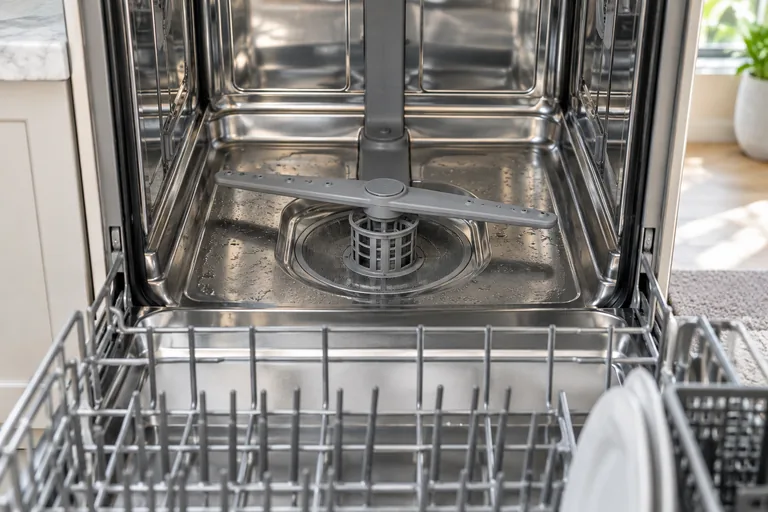
- Locate the filter (usually at the bottom center of the dishwasher)
- Twist and lift to remove the cylindrical filter, then remove the flat filter underneath
- Rinse both filters under hot running water
- Use a soft brush (an old toothbrush works well) to scrub away stuck-on debris
- For stubborn residue, soak in warm soapy water for 10-15 minutes
- Rinse thoroughly and replace
How often: Clean the filter at least once a week, or after every few loads if you don't pre-rinse dishes.
Step 2: Clean the Door Gasket
The rubber gasket around the door is a hidden odor source that's easy to overlook.
- Open the door and examine the rubber seal around the perimeter
- Pull back the folds of the gasket to reveal hidden areas
- Wipe the entire gasket with a cloth soaked in warm, soapy water
- For mold spots, use a solution of equal parts white vinegar and water
- Use a toothbrush to clean deep in the folds
- Wipe dry with a clean cloth
Step 3: Clean the Spray Arms
Food particles can clog spray arm holes, and water trapped inside spray arms can become stagnant.
- Remove the spray arms (most twist or clip off)
- Hold up to light to check for clogged holes
- Use a toothpick or thin wire to clear any blocked holes
- Rinse under running water
- Shake to remove water from inside the arms
- Reinstall securely
Step 4: Clean the Drain Area
The drain area at the bottom of the dishwasher collects debris that the filter misses.
- Remove the filter to access the drain area
- Check for food debris, glass shards, or other objects
- Wipe the area with a damp cloth
- Use a paper towel to soak up any standing water
- Check the drain opening and remove any visible obstructions
Step 5: Clean the Interior Walls and Racks
- Remove the dish racks
- Wipe down interior walls with a damp cloth
- Pay special attention to the top of the interior and corners
- Clean the racks, especially the tine ends where residue accumulates
- Wipe the inside of the door, including the hinge area at the bottom
Step 6: Run a Cleaning Cycle
After manually cleaning components, run a cleaning cycle to sanitize the entire system:
Option A: Vinegar Cycle
- Place a dishwasher-safe cup filled with white vinegar on the top rack
- Run the dishwasher empty on the hottest cycle
- The vinegar will disperse during the cycle and help break down residue and kill bacteria
Option B: Baking Soda Follow-Up
- After the vinegar cycle completes, sprinkle one cup of baking soda on the bottom of the dishwasher
- Run a short hot cycle
- This provides additional deodorizing power
Option C: Commercial Dishwasher Cleaner
- Use products like Affresh, Finish Dishwasher Cleaner, or Glisten
- Follow product instructions (usually place in empty dishwasher and run hot cycle)
- These products are formulated specifically for dishwasher cleaning and are especially effective for stubborn odors
| Cleaning Method | Best For | Frequency |
|---|---|---|
| White vinegar cycle | Regular maintenance, light odors | Monthly |
| Vinegar + baking soda | Moderate odors, hard water areas | Monthly or as needed |
| Commercial cleaner (Affresh, etc.) | Stubborn odors, deep cleaning | Monthly or every 30 loads |
| Bleach cycle (if safe for your model) | Mold and mildew issues | Only when needed, not routine |
Addressing Specific Odor Problems
Persistent Rotten Egg Smell
If the rotten egg smell persists after cleaning, address these potential causes:
Check the drain hose:
- Locate the drain hose under the sink
- Verify it loops up high (minimum 20" from floor) before connecting to the disposal or drain
- If there's no high loop, reposition the hose
- Consider installing an air gap if local codes require it
Clean the garbage disposal:
- Odors can originate from the disposal and migrate back to the dishwasher
- Run ice cubes and lemon peels through the disposal
- Use a disposal cleaner or baking soda and vinegar
Check for a clogged drain:
- If water isn't draining completely, food and bacteria accumulate
- Run the disposal before running the dishwasher
- Check for drain hose kinks
Mold That Keeps Returning
If mold returns quickly after cleaning:
- Leave the door ajar: After each cycle, crack the door open to allow moisture to escape
- Run the dishwasher regularly: Infrequent use promotes mold growth
- Use a rinse aid: Helps dishes dry faster, reducing moisture in the machine
- Check the heating element: If dishes aren't drying, the heating element may have failed
- Improve kitchen ventilation: High humidity in the kitchen contributes to mold growth
Smell When Dishwasher Is Running
If the smell is most noticeable during operation:
- Hot water temperature: If your water heater is set too low (below 120°F), the dishwasher may not get hot enough to kill bacteria effectively
- Detergent issue: Old or degraded detergent can smell when heated; use fresh detergent
- Heating element problem: A failing element may create burning smells
Preventing Dishwasher Odors
Once you've eliminated existing odors, these habits will prevent them from returning:
Daily Habits
- Scrape dishes before loading: Remove large food particles, but you don't need to pre-rinse
- Run the disposal before the dishwasher: Clears the drain line the dishwasher uses
- Leave the door cracked open: After the cycle ends, allow moisture to escape
- Run hot water at the sink first: This ensures the dishwasher starts with hot water
Weekly Maintenance
- Clean the filter: A quick rinse prevents buildup
- Wipe the door seal: Remove any visible debris
- Check the bottom for debris: Remove anything that's fallen during the week
Monthly Maintenance
- Run a cleaning cycle: With vinegar, baking soda, or a commercial cleaner
- Clean spray arms: Check for and clear any clogged holes
- Inspect the door gasket thoroughly: Clean any mold or mildew spots
Usage Tips
- Use your dishwasher regularly: Run it at least every few days to prevent stagnation
- Use the heated dry option: Or at least the "sanitize" or high-temperature wash option
- Don't overload: Proper water circulation is essential for cleaning
- Use quality detergent: Poor detergents leave more residue
- Use rinse aid: Improves drying and reduces water spots and residue
When to Call a Professional
While most dishwasher odors can be resolved with cleaning, some situations require professional attention:
- Persistent odors after thorough cleaning: May indicate hidden mold or drain issues
- Burning smell not caused by melted plastic: Could indicate electrical problems
- Sewage smell you can't resolve: May require plumbing modifications
- Standing water that won't drain: Pump or drain motor failure
- Dishes not getting clean: Combined with odors, may indicate multiple failing components
Dishwasher Problems Beyond Cleaning?
If cleaning doesn't resolve your dishwasher's odor issues, or if you're experiencing other problems, our technicians can diagnose and repair the underlying cause.
Call (437) 524-1053Same-day service available in the Greater Toronto Area
Common Dishwasher Cleaning Products Compared
Here's a comparison of popular products for dishwasher cleaning and deodorizing:
| Product | Type | Best For | Approximate Cost |
|---|---|---|---|
| White vinegar | Natural | General cleaning, light odors, hard water | ~$3/bottle |
| Baking soda | Natural | Deodorizing, gentle scrubbing | ~$2/box |
| Affresh Dishwasher Cleaner | Commercial tablet | Deep cleaning, stubborn residue | ~$6 for 6 tablets |
| Finish Dishwasher Cleaner | Commercial liquid | Grease removal, monthly maintenance | ~$5 per bottle |
| Glisten Dishwasher Cleaner | Commercial liquid | Lime and rust, hard water areas | ~$5 per bottle |
| Lemi Shine Dishwasher Cleaner | Commercial (citric acid based) | Hard water deposits, food residue | ~$5 per bottle |
Frequently Asked Questions
A rotten egg smell in your dishwasher is usually caused by hydrogen sulfide gas produced by bacteria feeding on food particles trapped in the filter, drain, or crevices. It can also come from sulfur in your water supply or a blocked drain line that allows sewer gas to enter. Cleaning the filter, running hot water before starting cycles, and checking the drain connection usually resolves this issue.
For optimal performance and odor prevention, clean your dishwasher filter weekly, wipe door seals monthly, run a cleaning cycle with dishwasher cleaner or vinegar monthly, and perform a deep clean of all components every 3-6 months. If you use your dishwasher daily or frequently wash heavily soiled dishes, increase cleaning frequency.
You can use bleach in a dishwasher with a plastic interior, but never use bleach in a dishwasher with a stainless steel tub, as it can damage and discolor the steel. Also never mix bleach with other cleaners or use it immediately after using vinegar. For most dishwashers, white vinegar or commercial dishwasher cleaners are safer and effective alternatives.
A wet dog smell in your dishwasher is typically caused by bacteria and mold growing in stagnant water or on food residue. This often happens when the dishwasher doesn't dry properly, the filter is clogged, or the door is kept closed between uses. Clean the filter, leave the door ajar between cycles, and run a cleaning cycle with vinegar to eliminate the odor.
The best dishwasher cleaners for odors include commercial products like Affresh, Finish Dishwasher Cleaner, or Glisten. For a natural option, white vinegar works well for light odors. For stubborn smells, baking soda combined with vinegar provides extra cleaning power. Run these with an empty dishwasher on the hottest cycle for best results.