
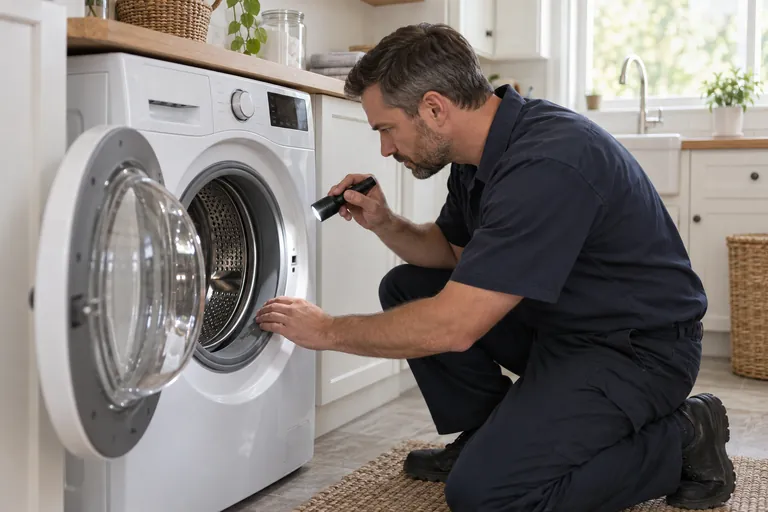
The door seal (also called the door gasket or boot seal) is one of the most important—and most neglected—parts of a front load washing machine. It keeps water inside during wash cycles, but its accordion-like folds create perfect hiding spots for mold, mildew, and debris. This comprehensive guide covers everything from routine cleaning to complete replacement, helping you keep your washer fresh, leak-free, and running efficiently.
Understanding the Front Load Washer Door Seal
The door seal is a large rubber gasket that fits between the outer tub and the door opening. Its design serves multiple purposes:
- Water containment: Creates a watertight seal when the door is closed
- Flexibility: Allows for drum movement during spin cycles
- Loading accommodation: Folds back to allow clothes to enter the drum
- Drainage: Some designs include small holes to drain water from the folds
Why Door Seals Cause Problems
The gasket's folded design, while necessary for function, creates challenges:
- Water pools in the folds after each wash
- Detergent residue accumulates in the rubber
- Warm, moist environment promotes mold and mildew growth
- Debris (coins, tissues, small items) get trapped and cause damage
- Regular wear eventually causes tears and cracks
The #1 Cause of Door Seal Problems
Keeping the washer door closed between uses is the leading cause of mold and odor problems. Moisture trapped inside creates an ideal environment for mold growth. Always leave the door ajar after washing.
How to Clean Your Door Seal
Regular cleaning prevents mold buildup and extends gasket life. Here's how to clean your front load washer door seal effectively:
What You'll Need
- Spray bottle
- White vinegar or bleach solution (1:1 with water)
- Baking soda (for tough stains)
- Old toothbrush or soft scrub brush
- Microfiber cloths or paper towels
- Rubber gloves
Step-by-Step Cleaning Process
- Inspect the gasket: Pull back the folds and look for visible mold, mildew, debris, or damage
- Remove loose debris: Wipe out any trapped items, tissues, hair, or lint
- Apply cleaning solution: Spray your chosen cleaner into all folds and crevices
- Let it sit: Allow 10-15 minutes for the solution to break down mold and residue
- Scrub gently: Use a toothbrush to scrub inside the folds, paying attention to the bottom where water collects
- Wipe clean: Use a damp cloth to remove all cleaner and loosened debris
- Dry thoroughly: Wipe with a dry cloth to remove excess moisture
- Run a cleaning cycle: Run an empty hot water cycle with 1 cup of baking soda or a washing machine cleaner
Cleaning Solution Options
| Cleaner | Best For | Precautions |
|---|---|---|
| White Vinegar | Light mold, odors, regular maintenance | Safe for rubber, may need multiple applications |
| Bleach Solution (1:1) | Heavy mold, black stains | Don't mix with vinegar; rinse thoroughly |
| Baking Soda Paste | Stubborn stains, deodorizing | May require scrubbing; rinse well |
| Commercial Washer Cleaner | All-purpose cleaning | Follow product instructions |
| Hydrogen Peroxide | Mold, gentle alternative to bleach | Use 3% concentration |
Never Mix Bleach and Vinegar
Combining bleach and vinegar creates toxic chlorine gas. Use one or the other, never both. If switching cleaners, run a rinse cycle between applications.
Preventing Mold and Odors
Prevention is much easier than remediation. Follow these practices to keep your door seal clean:
After Every Wash
- Leave the door ajar: Allow air to circulate and moisture to evaporate
- Wipe the gasket: Quick wipe of visible moisture in the folds
- Leave detergent drawer open: Another area prone to moisture buildup
Weekly Maintenance
- Inspect gasket folds: Check for debris, early mold signs
- Wipe down thoroughly: Use a damp cloth on all gasket surfaces
- Check for trapped items: Remove any small items that might have fallen into folds
Monthly Maintenance
- Run a cleaning cycle: Use hot water with baking soda, vinegar, or commercial cleaner
- Deep clean the gasket: Full cleaning as described above
- Inspect for damage: Look for tears, cracks, or wear
Detergent Best Practices
Excess detergent is a major contributor to gasket problems:
- Use only HE (High Efficiency) detergent
- Use the recommended amount—more isn't better
- Consider using slightly less than recommended
- Avoid fabric softener in the drum (use dispenser)
- Liquid detergent leaves less residue than powder
Diagnosing Door Seal Leaks
If your front load washer is leaking from the door area, the gasket is often involved. Here's how to diagnose the issue:
Types of Door Area Leaks
| Leak Location | Possible Cause | Solution |
|---|---|---|
| Bottom of door | Torn gasket, debris in seal, clogged drain holes | Clean/inspect gasket, clear drain holes, replace if torn |
| Side of door | Displaced gasket, door alignment, debris | Reposition gasket, check door hinges |
| Around entire door | Failed gasket, door latch issue, oversudsing | Replace gasket, check latch, reduce detergent |
| Inside the fold | Tear in inner gasket surface | Replace gasket |
Inspection Checklist
- Visual inspection: Pull back all folds and look for tears, cracks, or holes
- Feel for damage: Run your fingers along the rubber feeling for thin spots or cuts
- Check seating: Ensure the gasket is properly seated in its mounting groove all the way around
- Inspect door strike: The door should close firmly and engage the latch fully
- Look for debris: Small items trapped in the seal can prevent proper closure
- Check drain holes: Some gaskets have small drain holes that can clog
The Fill Test
To identify exactly where a leak originates:
- Start a wash cycle and let the tub fill partially
- Pause the cycle
- Watch the door seal area carefully for water
- Note exactly where water appears
- This helps identify which part of the gasket is failing
When Can a Door Seal Be Repaired?
Not all gasket problems require full replacement. Some issues can be repaired:
Repairable Issues
- Displaced gasket: If the rubber has simply slipped out of position, it can often be reseated
- Minor surface mold: Cleaning can restore a stained but intact gasket
- Clogged drain holes: Clear blockages with a small brush or pipe cleaner
- Debris causing incomplete seal: Remove debris and test
Issues Requiring Replacement
- Tears or holes: Any breach in the gasket will leak
- Hardened rubber: Old gaskets lose flexibility and won't seal properly
- Deep mold penetration: If cleaning doesn't remove mold, it's in the rubber
- Stretched gasket: Won't return to proper shape
- Multiple problem areas: More cost-effective to replace
Need Door Seal Replacement?
Our certified technicians replace door seals on all major washer brands with genuine parts. Same-day service available throughout the GTA.
Book Washer RepairDIY Door Seal Replacement Guide
Replacing a front load washer door seal is manageable for DIY-inclined homeowners. Here's the general process (specific steps vary by brand):
Tools Required
- Screwdrivers (Phillips and flat-head)
- Torx drivers (some brands)
- Pliers
- Putty knife or flat pry tool
- Work gloves
- Flashlight
Step-by-Step Replacement
Step 1: Prepare the Washer
- Unplug the washer or turn off the breaker
- Turn off water supply valves
- Remove any clothes from the drum
Step 2: Remove the Front Panel
On most front loaders:
- Open the door
- Locate the wire retaining band (spring clamp) holding the gasket to the front panel
- Find the spring or clamp connection point (usually bottom or side)
- Use pliers to release or unscrew the clamp
- Peel the gasket lip away from the front panel
- Remove the front panel screws (typically 2-4 screws at bottom, may need to remove top panel first)
- Disconnect any wiring (door switch)
- Remove the front panel
Step 3: Remove the Old Gasket
- Locate the inner retaining band securing the gasket to the tub
- Release or unscrew this clamp
- Pull the gasket off the tub flange
- Note any drain tubes connected to the gasket—disconnect them
- Remove the old gasket completely
Step 4: Prepare for New Gasket
- Clean the tub flange and door opening thoroughly
- Remove any residue or debris
- Compare old and new gaskets to confirm correct part
- Note any alignment marks on the gasket (often a triangle or arrow)
Step 5: Install New Gasket
- Align the gasket mark with the tub mark (usually at top center)
- Stretch the gasket over the tub flange, working around the circumference
- Ensure the gasket lip is fully seated in the groove
- Install the inner retaining band
- Reconnect any drain tubes
Step 6: Reinstall Front Panel
- Position front panel and reconnect wiring
- Install panel screws
- Fold the gasket lip over the front panel opening
- Install the outer retaining band
- Reinstall any other components removed
Step 7: Test
- Restore power and water
- Run a quick wash cycle
- Watch for leaks around the entire door seal
- Check that door closes and latches properly
Take Photos
Before disconnecting anything, photograph the gasket installation, wire connections, and drain tube routing. These photos are invaluable during reassembly.
Cost Analysis: Repair vs. Replace
Understanding costs helps you make informed decisions:
| Option | Cost Range | Best When |
|---|---|---|
| DIY Cleaning | $5-15 (supplies) | Mold/odor with no physical damage |
| DIY Replacement | $75-200 (part) | Handy homeowner, simple model |
| Professional Replacement | $175-400 (total) | Complex model, lack of time/tools |
| New Washer | $800-2000+ | Old washer, multiple issues |
When Replacement Makes Sense
Consider the washer's age and condition:
- Washer under 5 years: Definitely repair—plenty of life left
- Washer 5-10 years: Repair if otherwise working well
- Washer over 10 years: Consider repair costs vs. replacement, especially if other issues exist
Brand-Specific Information
Different brands have unique gasket designs and replacement procedures:
LG Front Load Washers
LG gaskets typically use wire retaining bands with a spring connection. The gasket often includes drain holes at the bottom. Parts are widely available and reasonably priced ($100-175).
Samsung Front Load Washers
Samsung uses similar wire band retention. Some models have the door boot connected to the dispenser housing—note the routing during removal. Parts range $100-200.
Whirlpool/Maytag
Whirlpool brands often use a simpler gasket design. Some models use a two-piece gasket system. Front panel removal is usually straightforward. Parts are $75-150.
GE Front Load Washers
GE gaskets are generally easy to replace. The front panel comes off after removing screws at the bottom. Wire band uses a spring for tension. Parts run $80-160.
Bosch
Bosch machines are compact and may require more disassembly. The gasket quality is typically excellent. Parts can be more expensive ($150-250) and may need to be ordered.
Frequently Asked Questions
Why does my front load washer door seal get moldy?
Mold thrives in the warm, moist environment of the door seal. After each wash, water collects in the gasket's folds. Combined with detergent residue and fabric softener, this creates ideal conditions for mold and mildew growth. Keeping the door closed between washes traps this moisture and dramatically accelerates mold development.
How do I get mold out of my washer door seal?
For light to moderate mold, clean with a 1:1 mixture of water and white vinegar or bleach. Spray the solution into all folds, let it sit for 15 minutes, scrub with a toothbrush, and wipe clean. For stubborn mold, make a paste of baking soda and water, apply to stains, scrub, then rinse. Follow up by running an empty hot water cycle with washer cleaner.
How much does it cost to replace a front load washer door seal?
The gasket itself typically costs $75-200 depending on brand and model. If you DIY, that's your total cost. Professional installation adds $100-200 in labor, bringing the total to $175-400. Premium brands like Bosch or Miele may cost more due to higher part prices and more complex installations.
Can I replace a front load washer door seal myself?
Yes, it's a manageable DIY project for mechanically inclined homeowners. You'll need basic tools, the correct replacement part, and 1-2 hours. The process involves removing the front panel, releasing retaining bands, removing the old gasket, and installing the new one in reverse. Take photos during disassembly to guide reassembly.
Why is my front load washer leaking from the door?
Common causes include: damaged or torn door seal, debris trapped in the gasket preventing proper seal, worn or warped door strike that doesn't close properly, overloading that prevents full door closure, using too much detergent creating excess suds, or a gasket that has slipped out of position. Inspect the gasket carefully and clean any debris before assuming it needs replacement.
Conclusion
The door seal is crucial to your front load washer's operation, yet it's often neglected until problems arise. Regular cleaning—especially wiping down the gasket and leaving the door open between uses—prevents most mold and odor issues. When damage does occur, replacement is straightforward for many models and restores your washer to like-new performance.
Remember the key prevention practices: leave the door ajar after washing, wipe down the gasket weekly, use the correct amount of HE detergent, and run a cleaning cycle monthly. These simple habits extend gasket life significantly and keep your laundry smelling fresh.
If your door seal needs replacement or you're dealing with persistent leaks, contact Nika Appliance Repair. We service all major washer brands throughout the Greater Toronto Area with same-day appointments available.
