
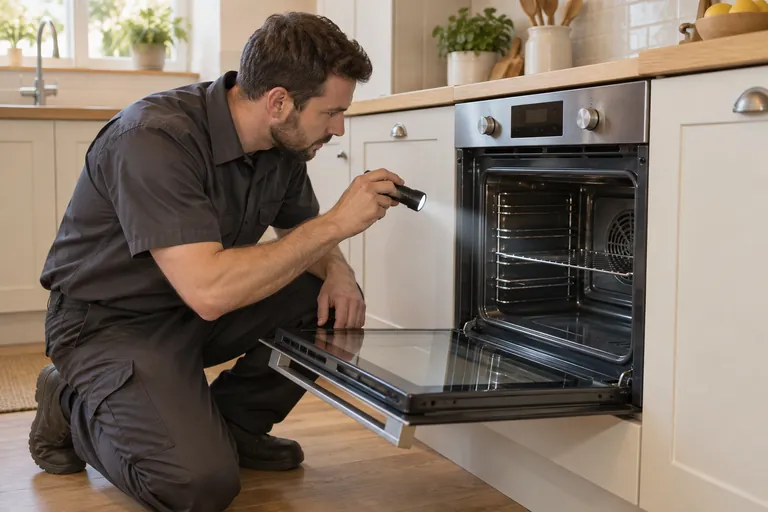
The self-cleaning oven feature promises effortless cleaning, but it's also one of the most common causes of oven breakdowns and service calls. The extreme temperatures required for pyrolytic cleaning—typically 850-900°F (450-480°C)—stress every component of your oven. In this guide, we'll cover common self-cleaning oven problems, what to do when things go wrong, and whether this convenient feature is worth the risks.
How Self-Cleaning Ovens Work
Understanding the self-cleaning process helps explain why problems occur:
The Pyrolytic Cleaning Process
- Door lock engages: A motorized or solenoid-driven lock secures the door before heating begins
- Temperature rises: The oven heats to 850-900°F (450-480°C)—roughly twice normal cooking temperature
- Food residue incinerates: At these temperatures, food soil turns to ash through pyrolysis
- Cycle completes: After 2-4 hours (varies by oven), heating stops
- Cooling period: The oven must cool below ~550°F before the door unlocks
- Ash removal: Once cool, you wipe out the remaining ash
Components Under Stress
The extreme temperatures affect multiple components:
- Door gasket: Exposed to maximum heat, may harden or crack
- Door glass: Thermal stress can cause cracking or shattering
- Heating elements: Run at maximum output for extended periods
- Temperature sensors: Subjected to temperatures beyond normal range
- Control board: Heat migration can damage electronic components
- Door lock mechanism: Mechanical stress and heat exposure
- Thermal fuse: May blow if temperatures exceed safe limits
Industry Secret
Many appliance repair technicians—including our team—advise against using the self-cleaning feature. The convenience rarely outweighs the risk of expensive repairs. Manual cleaning, while more work, is far gentler on your oven.
Common Self-Cleaning Oven Problems
Here are the issues we most frequently encounter after customers run a self-cleaning cycle:
Problem 1: Door Won't Unlock
This is the most common post-self-clean complaint. The door should unlock automatically once the oven cools sufficiently.
Possible causes:
- Oven still too hot (normal—wait 30-60 minutes after cycle ends)
- Door lock motor failed
- Door latch broken or stuck
- Control board not sending unlock signal
- Temperature sensor giving false reading
What to try:
- Wait at least one hour after the cycle ends
- Try turning the oven off at the breaker for 5 minutes, then restore power
- If equipped, try the "door unlock" or "clear/off" button
- Some models have a manual release accessible by removing a cover
- If still locked, call for service—forcing the door can cause damage
Problem 2: Oven Won't Heat After Self-Clean
Finding your oven dead after a self-cleaning cycle is frustratingly common.
Possible causes:
- Blown thermal fuse: Safety device that cuts power if oven overheats
- Failed heating element: Extreme temperatures burned out the element
- Damaged temperature sensor: Oven can't regulate temperature
- Control board failure: Electronics damaged by heat
- Tripped breaker: Check your electrical panel
| Symptom | Likely Cause | Repair Complexity |
|---|---|---|
| Completely dead (no display) | Thermal fuse, power issue | Moderate DIY |
| Display works, won't heat | Element, temp sensor | Moderate DIY |
| Error code displayed | Specific component (look up code) | Varies |
| Inconsistent heating | Temperature sensor, control board | Pro recommended |
Problem 3: Door Glass Shattered
The extreme temperatures of self-cleaning are the leading cause of oven door glass breakage.
Why it happens:
- Thermal stress from rapid temperature changes
- Pre-existing scratches or chips that weaken glass
- Manufacturing defects in tempered glass
- Age-related glass fatigue
Prevention:
- Inspect glass for scratches before self-cleaning
- Never use abrasive cleaners on oven glass
- Consider avoiding self-clean on older ovens
Problem 4: Excessive Smoke or Burning Smell
Some smoke during self-cleaning is normal, but excessive smoke indicates a problem.
Causes of excessive smoke:
- Too much food residue—should remove large debris before starting
- Grease buildup on oven surfaces
- Spills on the heating element
- Blocked ventilation
What to do:
- Ensure adequate ventilation (range hood, open windows)
- If smoke is severe, cancel the cycle and let oven cool
- Remove large debris manually before using self-clean
Problem 5: Self-Clean Won't Start
If the self-cleaning cycle refuses to initiate:
Check these items:
- Door completely closed and latched
- Oven racks removed (some models require this)
- Control lock not engaged
- Oven not in Sabbath mode
- Door lock mechanism functioning
Problem 6: Oven Trips Breaker During Self-Clean
The high power draw during self-cleaning can overload circuits.
Possible causes:
- Circuit overloaded with other appliances
- Weak breaker
- Wiring issues
- Element drawing excessive current (failing)
Oven Problems After Self-Cleaning?
Our technicians see these issues daily. We diagnose and repair self-clean related problems on all major brands with same-day service available.
Book Oven RepairSafety Concerns with Self-Cleaning
Beyond component damage, self-cleaning poses genuine safety considerations:
Fumes and Air Quality
The pyrolytic process produces fumes from burning food residue and potentially from oven coatings:
- Carbon monoxide: Produced when organic matter burns incompletely
- Teflon fumes: Some oven interiors have non-stick coatings that release toxic fumes when overheated—deadly to birds
- General smoke: Irritating to respiratory systems
Safety measures:
- Run the range hood on high throughout the cycle
- Open windows for cross-ventilation
- Remove birds from the home entirely
- Keep children away from the kitchen
- Don't leave home during the cycle
Fire Risk
While rare, fires can occur during self-cleaning:
- Excessive grease can ignite at self-clean temperatures
- Paper or plastic accidentally left inside can burn
- Faulty door seals can allow flame escape
Prevention:
- Remove large food debris before starting
- Wipe up major grease spills manually
- Verify the oven is empty of foreign objects
- Stay home during the entire cycle
Hot Exterior Surfaces
During self-cleaning, exterior oven surfaces become much hotter than during normal cooking:
- Door exterior can exceed 200°F
- Control panel may become hot
- Nearby cabinets and countertops get warm
Keep children and pets away from the oven during and after the cycle until fully cooled.
When to Avoid Self-Cleaning
Skip the self-cleaning feature in these situations:
Before Major Events
Never run self-clean the day before Thanksgiving, Christmas, or any important cooking event. If something fails, you'll be without an oven when you need it most.
On Older Ovens
Ovens more than 8-10 years old have components that may be near the end of their life. The stress of self-cleaning often pushes aging parts over the edge.
If Glass Shows Damage
Any scratches, chips, or previous cracks in oven door glass significantly increase shatter risk during self-cleaning.
With Heavy Soiling
Extremely dirty ovens produce excessive smoke and increase fire risk. For heavy buildup, clean manually first, then use self-clean for remaining residue if desired.
If You Have Birds
Birds are extremely sensitive to airborne toxins. Teflon-type coatings in some ovens release fumes that can kill birds quickly. If you have pet birds, either don't use self-clean or remove them from the home entirely.
Alternatives to Self-Cleaning
Manual cleaning is gentler on your oven and often just as effective:
Baking Soda and Vinegar Method
- Remove oven racks
- Make a paste of baking soda and water
- Spread paste on oven interior (avoid elements)
- Let sit overnight (8-12 hours)
- Wipe out with damp cloths
- Spray remaining residue with vinegar
- Wipe clean
Commercial Oven Cleaners
Products like Easy-Off are effective for tough grease:
- Use in well-ventilated area
- Wear gloves and eye protection
- Follow product instructions carefully
- Rinse thoroughly after cleaning
Steam Cleaning
Some modern ovens offer a "steam clean" feature—a gentler alternative that uses lower temperatures and water vapor. While less effective for heavy soil, it's much safer for components.
Our Recommendation
For most households, we recommend the baking soda method for regular maintenance and occasional use of commercial cleaners for tough jobs. Reserve self-cleaning for truly stubborn buildup, and limit use to 2-3 times per year maximum.
Troubleshooting Guide
Quick reference for common post-self-clean issues:
| Problem | First Steps | If That Fails |
|---|---|---|
| Door won't unlock | Wait 1 hour, cycle breaker off/on | Call for service—don't force door |
| Oven completely dead | Check breaker, thermal fuse | Likely thermal fuse or control board |
| Won't heat (display works) | Check for error codes | Element or temperature sensor |
| Error code F9/door lock | Cycle power, try door unlock button | Door lock motor replacement |
| Glass shattered | Don't use oven, clean carefully | Glass replacement needed |
Typical Repair Costs
Common repairs after self-cleaning failures:
| Repair | Part Cost | With Labor |
|---|---|---|
| Thermal fuse | $15-50 | $100-175 |
| Door lock motor | $50-150 | $150-275 |
| Bake element | $40-100 | $125-225 |
| Temperature sensor | $30-75 | $100-175 |
| Control board | $150-400 | $250-500 |
| Door glass | $75-200 | $150-350 |
Frequently Asked Questions
Why won't my oven door unlock after self-cleaning?
The door lock is a safety feature that won't release until the oven cools below approximately 550°F. This typically takes 30-60 minutes after the cycle ends. If the door remains locked after the oven is completely cool (1+ hours), try cycling the breaker off for 5 minutes. Persistent locking usually indicates a failed door lock motor, broken latch mechanism, or control board issue.
Can the self-cleaning cycle damage my oven?
Yes, the extreme temperatures (850-900°F) stress all oven components significantly. Common damage includes shattered door glass, failed heating elements, blown thermal fuses, damaged temperature sensors, and control board failures. Many appliance professionals advise using self-clean sparingly or avoiding it altogether in favor of manual cleaning.
Why did my oven stop working after self-cleaning?
Self-cleaning often triggers failure of components that were already weakened. The most common post-self-clean failures are blown thermal fuses (safety devices that cut power when overheated), failed heating elements, and damaged control boards. While frustrating, these components were likely near end of life—self-cleaning just accelerated the inevitable.
How often should I run the self-cleaning cycle?
If you choose to use self-clean, limit it to 2-4 times per year maximum. More frequent use significantly increases component wear. Many appliance professionals recommend avoiding self-clean entirely and using manual cleaning methods (baking soda paste, commercial cleaners) which are gentler on oven components.
Is self-cleaning safe for pets and children?
The fumes produced during self-cleaning can be harmful. Birds are especially vulnerable—Teflon-type coating fumes can be fatal to birds. Remove birds from the home entirely during self-clean. Keep children away from the kitchen, as the oven exterior becomes much hotter than during normal cooking. Always run the range hood and ensure good ventilation.
Conclusion
The self-cleaning feature promises convenience but comes with significant risks. The extreme temperatures required stress every component of your oven, leading to expensive repairs—often at the worst possible time. Our service calls spike dramatically the week before Thanksgiving and Christmas, as homeowners discover their self-cleaned ovens have stopped working.
If you do use self-clean, limit it to 2-3 times per year, never before important cooking events, and always ensure proper ventilation. For most households, manual cleaning with baking soda or commercial cleaners is the safer, more reliable approach.
Experiencing oven problems after a self-cleaning cycle? Contact Nika Appliance Repair for fast, professional service throughout the Greater Toronto Area. We diagnose and repair all major oven brands with same-day appointments available.
