Dryer Thermal Fuse: Testing, Replacement & What Causes It to Blow
If your dryer suddenly stops heating or won't start at all, a blown thermal fuse is one of the most common causes. This essential safety device protects your home from fire, but when it fails, your laundry routine grinds to a halt. Learn how to diagnose, replace, and prevent thermal fuse problems.
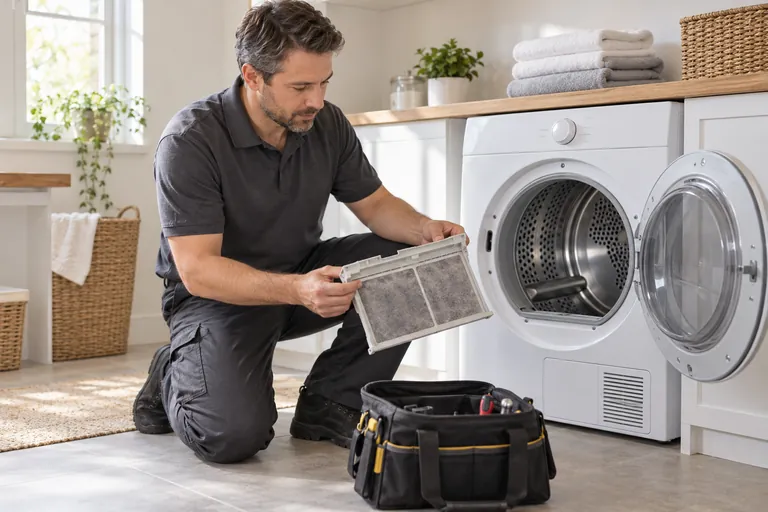
A thermal fuse is a small but critical component in your dryer's safety system. When your dryer overheats, the thermal fuse "blows" - permanently breaking the circuit to prevent a house fire. While this safety feature is essential, it means you'll need to replace the fuse and address the underlying cause before your dryer works again.
This guide covers everything you need to know about dryer thermal fuses: what they do, why they fail, how to test them, and step-by-step replacement instructions. We'll also explain the crucial step most DIYers miss - addressing the root cause to prevent repeat failures.
What Is a Dryer Thermal Fuse?
A thermal fuse is a one-time-use safety device that permanently opens the circuit when exposed to excessive heat. Unlike a resettable thermostat, once a thermal fuse blows, it must be replaced - it cannot be reset or repaired.
How It Works
The thermal fuse contains a temperature-sensitive element that melts at a specific temperature (typically 196°F to 309°F depending on the model). When this element melts, it breaks the electrical circuit, cutting power to the heating element or the entire dryer.
Where It's Located
The thermal fuse is usually found on or near the exhaust duct housing at the back of the dryer. Specific locations by brand:
| Brand | Location | Access |
|---|---|---|
| Whirlpool/Maytag/Kenmore | Exhaust duct housing (rear) | Remove back panel |
| Samsung | Blower housing (rear) | Remove back panel |
| LG | Blower cover (rear) | Remove back panel |
| GE/Hotpoint | Exhaust duct (rear) | Remove back panel |
| Frigidaire/Electrolux | Blower housing (rear) | Remove back panel |
Identification Tip
The thermal fuse is a small, thin plastic component (about 1-2 inches long) with two wire terminals. It's usually white or black and mounted to the exhaust duct or blower housing with a screw or metal bracket.
Symptoms of a Blown Thermal Fuse
A blown thermal fuse typically causes one of two symptoms, depending on your dryer model:
Symptom 1: Dryer Won't Start at All
On many dryers, the thermal fuse is wired in series with the main power circuit. When it blows:
- The dryer appears completely dead
- No lights, sounds, or display
- Pressing start does nothing
- May seem like a power problem
Symptom 2: Dryer Runs But Won't Heat
On some models, the thermal fuse only controls the heating circuit:
- Drum tumbles normally
- Controls work fine
- No heat is produced
- Clothes come out damp
Don't Ignore This
A blown thermal fuse is a warning sign that your dryer overheated. Simply replacing the fuse without finding and fixing the cause will likely result in another blown fuse - or worse, a fire. Always investigate before running the dryer again.
What Causes a Thermal Fuse to Blow?
Understanding why the fuse blew is essential to preventing it from happening again. Here are the most common causes:
1. Clogged Lint Filter (Most Common)
A dirty lint filter restricts airflow through the dryer. When hot air can't escape:
- Internal temperature rises rapidly
- Thermal fuse reaches its limit and blows
- Solution: Clean lint filter before every load
2. Blocked Exhaust Vent
Even with a clean lint filter, a blocked exhaust vent causes overheating:
- Lint accumulates in the vent over time
- Bird nests or debris can block exterior vent
- Crushed or kinked flexible duct restricts airflow
- Solution: Clean entire vent system annually
3. Kinked or Long Vent Hose
Problems with the vent hose itself:
- Flexible foil hose crushed behind dryer
- Vent run too long (over 25 feet with no bends)
- Too many elbows in vent system
- Solution: Use rigid or semi-rigid duct, minimize length
4. Failing Heating Element
A malfunctioning heating element can cause overheating:
- Element shorted to ground runs continuously
- Produces too much heat for fuse to handle
- Solution: Test and replace heating element
5. Defective Cycling Thermostat
The cycling thermostat regulates temperature during operation:
- If stuck closed, element runs nonstop
- Temperature climbs until fuse blows
- Solution: Test and replace thermostat
6. Failed Blower Motor or Wheel
The blower creates airflow through the dryer:
- Slow or stopped blower = no air circulation
- Heat builds up inside drum
- Solution: Repair or replace blower assembly
How to Test a Thermal Fuse
Testing a thermal fuse is simple if you have a multimeter. Here's how:
Tools Needed
- Multimeter (set to continuity or lowest ohms setting)
- Nut driver set (1/4" and 5/16")
- Screwdriver
- Flashlight
Step-by-Step Testing
- Unplug the dryer - Essential for safety
- Access the thermal fuse:
- Pull dryer away from wall
- Remove back panel screws
- Locate thermal fuse on exhaust housing
- Disconnect the wires from the thermal fuse terminals
- Set your multimeter to continuity mode or the lowest ohms setting
- Touch the probes to the two terminals on the fuse
- Read the result:
- Good fuse: Shows continuity (beep) or near-zero ohms
- Blown fuse: No continuity (no beep) or infinite/OL ohms
No Multimeter?
You can visually inspect the fuse - some blown fuses show visible damage, discoloration, or a small hole in the casing. However, many blown fuses look perfectly fine, so testing is the only reliable method.
How to Replace the Thermal Fuse
If testing confirms a blown fuse, replacement is straightforward:
Finding the Right Replacement
- Note your dryer's model number (inside door frame or on back)
- Search for "thermal fuse" + your model number
- Match the fuse's temperature rating and physical dimensions
- Cost: $10-25 for most models
Replacement Steps
- Ensure power is disconnected
- Take a photo of wire connections before removal
- Remove the old fuse:
- Disconnect wires from terminals (note positions)
- Remove mounting screw or bracket
- Lift out the old fuse
- Install the new fuse:
- Position in same location
- Secure with mounting screw
- Reconnect wires to terminals
- Reassemble the back panel
Critical Step
Before running the dryer, you MUST clean the lint filter, exhaust vent, and check for proper airflow. Running the dryer without addressing the overheating cause will blow the new fuse immediately - or cause a fire.
Preventing Future Thermal Fuse Failure
Once you've replaced the fuse, take these steps to prevent it from happening again:
Immediate Actions
- Clean the lint filter completely
- Vacuum the lint trap housing (where filter sits)
- Disconnect and clean the entire exhaust vent
- Check the exterior vent flap opens freely
- Test airflow - feel for strong exhaust at exterior vent
Ongoing Maintenance
| Task | Frequency | Why It Matters |
|---|---|---|
| Clean lint filter | Every load | Primary airflow path |
| Vacuum lint trap | Monthly | Catches what filter misses |
| Clean exhaust vent | Annually | Prevents major blockages |
| Check exterior vent | Monthly | Ensures unobstructed exit |
| Inspect vent hose | When moving dryer | Prevent kinks/crushes |
Upgrade Your Vent System
If you have a flexible foil duct, consider upgrading:
- Rigid metal duct: Best option, smoothest airflow
- Semi-rigid aluminum: Good alternative, easier to install
- Avoid: Flexible plastic or foil - high fire risk and poor airflow
Related Components to Check
When the thermal fuse blows, other components may also be affected or responsible. While you have the dryer open, consider checking:
High-Limit Thermostat
- Usually located near the thermal fuse
- Resettable safety device (doesn't need replacement if working)
- Test with multimeter - should show continuity
Cycling Thermostat
- Located on blower housing or heating element housing
- Controls normal temperature cycling
- Should show continuity at room temperature
Heating Element
- Test for continuity (should have some resistance, 10-50 ohms)
- Check for grounding to case (shouldn't have continuity)
- A grounded element runs constantly and causes overheating
When to Call a Professional
Consider professional help if:
- You're not comfortable working with electrical components
- The fuse blows again after replacement and vent cleaning
- You suspect heating element or thermostat problems
- Your dryer is gas-powered (gas valves require expertise)
- You can't access or clean the entire vent system
Expert Dryer Repair in Toronto
Our technicians diagnose thermal fuse issues and the underlying causes. We carry common parts for same-day repair.
Call (437) 524-1053Cost Comparison: DIY vs. Professional
| Approach | Parts | Labor | Total |
|---|---|---|---|
| DIY - Fuse only | $10-25 | $0 | $10-25 |
| DIY - Fuse + thermostats | $30-50 | $0 | $30-50 |
| Professional - Diagnosis + repair | $15-30 | $85-145 | $100-175 |
| Professional - Multiple components | $40-80 | $100-150 | $140-230 |
Frequently Asked Questions
Will a dryer run with a blown thermal fuse?
It depends on the dryer model. On most dryers, a blown thermal fuse prevents the dryer from starting entirely - it appears completely dead. On some models, the dryer will run but produce no heat. Either way, the dryer won't function properly until the fuse is replaced.
What causes a dryer thermal fuse to blow?
The most common cause is restricted airflow from a clogged lint filter, blocked exhaust vent, or kinked vent hose. When hot air can't escape the dryer properly, internal temperature rises until the thermal fuse blows to prevent fire. Less common causes include a failing heating element, bad cycling thermostat, or malfunctioning blower motor.
How much does it cost to replace a dryer thermal fuse?
The thermal fuse itself costs $10-25. If you do the repair yourself, that's your total cost. Professional repair typically runs $100-175 total, including diagnosis, parts, and labor. The DIY repair takes about 20-30 minutes if you have basic tools and a multimeter.
Can you reset a thermal fuse?
No, thermal fuses cannot be reset. They are one-time-use safety devices that permanently break when triggered. Once blown, the fuse must be replaced with a new one. This design is intentional - it forces you to address the overheating problem before the dryer can run again.
Can I bypass the thermal fuse to test my dryer?
Technically possible but extremely dangerous and never recommended. The thermal fuse prevents house fires. Running a dryer without this protection is a serious fire hazard. Never bypass the thermal fuse - always replace it with the correct part.
How often do thermal fuses fail?
A thermal fuse should never blow under normal operating conditions. If it blows, something is wrong - usually a vent blockage. If you experience repeated thermal fuse failures, you have a persistent overheating problem that needs professional diagnosis.
Are all dryer thermal fuses the same?
No. Thermal fuses come in different temperature ratings (196°F to 309°F), physical sizes, and configurations. Always replace with the exact part number for your dryer model. Using the wrong fuse can result in nuisance tripping or, worse, failure to protect against overheating.
Where can I buy a replacement thermal fuse?
Thermal fuses are available at appliance parts stores (Reliable Parts, AM-RAD), online retailers (PartSelect, RepairClinic, Amazon), and some hardware stores. Search using your dryer's model number to find the correct part. Expect to pay $10-25 for most models.
Conclusion
A blown thermal fuse is both a nuisance and a warning. While the fuse itself is inexpensive and relatively easy to replace, the more important issue is understanding why it blew. In the vast majority of cases, the culprit is restricted airflow from accumulated lint or a blocked vent system.
Before simply swapping in a new fuse and running your dryer, take the time to thoroughly clean your lint filter, exhaust vent, and exterior vent opening. This maintenance not only prevents another thermal fuse failure but also reduces your risk of a dryer fire - one of the leading causes of house fires in North America.
If you've replaced the fuse and addressed airflow issues but the problem recurs, you likely have a component failure (heating element, thermostat, or blower) that requires professional diagnosis. Don't ignore repeated thermal fuse failures - they indicate a serious problem that could lead to a fire.
