
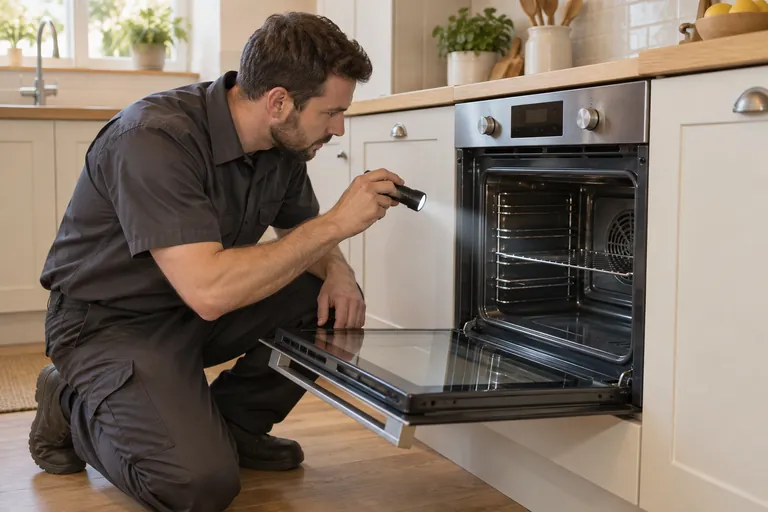
A broken oven door glass is both a safety hazard and an aesthetic concern. Whether the inner glass shattered during a self-cleaning cycle or the outer window cracked from impact, this guide covers everything you need to know about oven door glass replacement—from understanding why glass breaks to step-by-step DIY replacement instructions and guidance on when professional repair makes more sense.
Understanding Oven Door Glass Construction
Modern oven doors typically contain multiple layers of glass, each serving a specific purpose. Understanding this construction helps you identify which panel needs replacement and how to approach the repair.
Multi-Pane Door Construction
Most modern ovens use a multi-pane door design:
- Inner glass: The panel facing the oven cavity, exposed to cooking temperatures up to 500°F+ (260°C+) and self-cleaning temperatures up to 900°F (480°C)
- Middle glass (if present): Additional insulating layer found in triple-pane designs
- Outer glass: The visible exterior panel, designed for appearance and additional insulation
Types of Oven Glass
All oven door glass is tempered for safety, but variations exist:
| Glass Type | Characteristics | Common Location |
|---|---|---|
| Standard Tempered | Clear, heat-resistant, shatters into small pieces | Budget and mid-range ovens |
| Ceramic Glass | Higher heat tolerance, extremely durable | High-end and professional ovens |
| Pyrolytic Coated | Special coating for self-cleaning ovens | Inner glass on self-cleaning models |
| Low-E Glass | Reflective coating to reduce heat transfer | Energy-efficient models |
Why Oven Door Glass Breaks
Understanding the cause helps prevent future breakage and determines whether the damage might be covered under warranty.
Thermal Stress
The most common cause of oven glass breakage is thermal stress—rapid or uneven temperature changes that cause the glass to expand and contract unevenly. This can occur when:
- Cold items are placed against hot glass
- Liquid spills on the hot oven door
- The self-cleaning cycle creates extreme temperatures (often 850-900°F)
- The oven door is opened during preheating, causing cold air to hit hot glass
Physical Impact
Even tempered glass can break from impact:
- Dropping a heavy pan or pot against the door
- Accidentally hitting the glass while cleaning
- Children's toys or other objects striking the window
- Slamming the door closed
Pre-Existing Damage
Scratches, chips, or nicks in the glass surface create stress points where cracks can originate. Small damage from:
- Abrasive cleaners or scrubbing pads
- Sharp utensils touching the glass
- Moving oven racks that contact the glass
Manufacturing Defects
Rarely, tempered glass contains microscopic nickel sulfide inclusions or other defects that cause spontaneous breakage. This type of failure typically occurs within the first few years and may be covered under warranty.
Self-Cleaning Cycle Warning
Self-cleaning cycles are the leading cause of oven glass breakage. The extreme temperatures (850-900°F) stress the glass significantly. If your inner glass has scratches, chips, or previous thermal damage, avoid using the self-cleaning feature—clean manually instead.
Safety Considerations
Before attempting any repair, understand the safety implications:
Using the Oven with Broken Glass
Can you use your oven if the glass is broken?
- Outer glass only broken: Generally safe for short-term use, but heat will escape making the exterior hot—exercise caution
- Inner glass broken: Not recommended. Heat escapes directly, door exterior becomes dangerously hot, efficiency drops significantly, and remaining glass fragments could fall into food
- Multiple panes broken: Do not use until repaired
Cleanup of Broken Glass
Tempered glass shatters into small, relatively blunt pieces, but they can still cause cuts:
- Wear heavy work gloves and closed-toe shoes
- Use a stiff brush or broom to sweep large pieces
- Vacuum remaining fragments (use a shop vac if possible)
- Wipe surfaces with a damp paper towel to collect tiny pieces
- Check inside the oven cavity for fallen glass
Working with Replacement Glass
Even new tempered glass can shatter if mishandled:
- Never tap edges—tempered glass is weakest at edges
- Don't twist or flex the glass
- Store flat, not on edge
- Clean with soft cloths only
Finding the Right Replacement Glass
Getting the correct glass is crucial—oven door glass is model-specific and cannot be substituted.
Identifying Your Part
You'll need your oven's model number, found on a label inside the door frame, under the cooktop, or on the back of the unit. With this number, you can:
- Search the manufacturer's parts website
- Contact an authorized parts dealer
- Use third-party parts sites (AppliancePartsPros, PartSelect, etc.)
- Contact Nika Appliance Repair—we source genuine parts
Types of Replacement Parts
Depending on what broke, you may need:
- Inner glass panel: Usually $75-200, the most commonly replaced piece
- Outer glass panel: $50-150, often includes decorative coating or printing
- Middle glass (if applicable): $40-100
- Complete door assembly: $200-500+, sometimes easier than partial replacement on complex doors
| Brand | Typical Glass Cost | Availability |
|---|---|---|
| GE/Hotpoint | $75-150 | Widely available |
| Whirlpool/Maytag | $80-175 | Widely available |
| Samsung | $100-200 | Good availability |
| LG | $100-200 | Good availability |
| Frigidaire | $75-150 | Widely available |
| Bosch/Thermador | $150-300 | Specialty order |
| Viking/Wolf | $200-400 | Specialty order |
OEM vs. Aftermarket Parts
We recommend OEM (Original Equipment Manufacturer) glass for oven doors. Aftermarket options may not meet the same heat tolerance specifications, potentially creating safety hazards. The cost difference is usually minimal for this critical safety component.
DIY Glass Replacement Guide
Many oven door glass replacements are manageable DIY projects. Difficulty varies by oven design.
Tools You'll Need
- Screwdrivers (Phillips and flat-head)
- Torx drivers (some models)
- Work gloves
- Safety glasses
- Soft towels or blanket to lay door on
- Camera or phone (to photograph assembly for reference)
Outer Glass Replacement (Most Common DIY)
Outer glass is typically the easiest to replace:
- Ensure oven is completely cool and unplugged or breaker off
- Remove the oven door (usually by opening halfway, releasing hinge locks, then lifting up and out)
- Place door glass-side-up on a padded surface
- Photograph the assembly before disassembly
- Remove screws around the door perimeter (usually inside edge)
- Carefully separate the outer door panel from inner panel
- Remove broken glass from outer panel frame
- Clean the frame thoroughly
- Insert new glass into mounting clips or brackets
- Reassemble door in reverse order
- Reinstall door on oven
Inner Glass Replacement (More Complex)
Inner glass replacement requires accessing the space between panels:
- Remove the oven door as described above
- Place door inner-side-up on padded surface
- Remove inner panel screws (usually around edges)
- Carefully lift off inner panel, noting any clips or brackets
- The inner glass is now exposed—remove any remaining pieces carefully
- Clean mounting area thoroughly
- Note mounting method: clips, brackets, or adhesive foam
- Install new glass according to the original mounting method
- Replace insulation if present
- Reassemble in reverse order
Important Note
Some oven doors have the inner glass bonded to the door panel with high-temperature adhesive. If your inner glass is bonded (rather than held with clips), professional replacement is recommended—the adhesive requires special application.
Reinstalling the Oven Door
Door reinstallation is often trickier than removal:
- Align door hinges with oven hinge slots (usually at an angle)
- Slide hinges fully into slots
- Lock hinge clips in position (push down or flip)
- Test door operation—should open and close smoothly
- Check that door seals properly when closed
When to Call a Professional
While many glass replacements are DIY-friendly, some situations warrant professional service:
Complex Door Designs
High-end ovens from brands like Wolf, Sub-Zero, or Thermador often have complex door assemblies with multiple panels, integrated lighting, and precise alignment requirements.
Bonded Glass
If the inner glass is bonded with high-temperature adhesive rather than held with clips, proper replacement requires specialized adhesive application and curing.
Door Damage Beyond Glass
If the door frame, hinges, or seal are also damaged, comprehensive repair is more appropriate.
Self-Cleaning Oven Inner Glass
Self-cleaning ovens require inner glass rated for pyrolytic temperatures. Improper replacement can create safety hazards during self-cleaning cycles.
Time and Comfort Level
If you're not comfortable with the process or lack the proper tools, professional repair saves time and ensures a safe, correct installation.
Need Professional Oven Glass Replacement?
Our certified technicians replace oven door glass on all major brands with genuine OEM parts. Same-day service available throughout the GTA.
Book Oven RepairCost Comparison: DIY vs. Professional
Understanding the full cost picture helps you decide the best approach:
| Cost Factor | DIY | Professional |
|---|---|---|
| Glass panel | $50-200 | $50-200 (included) |
| Shipping | $15-40 | Included |
| Tools (if needed) | $0-30 | N/A |
| Labor | Free (your time) | $100-200 |
| Warranty on repair | Parts only | Parts + labor |
| Total Range | $65-270 | $150-400 |
Preventing Future Glass Breakage
Once you've replaced the glass, take steps to prevent recurrence:
Avoid Thermal Shock
- Never place cold items on or near hot oven glass
- Don't splash cold liquids on the hot door
- Let the oven cool before cleaning the door
- Avoid opening the door frequently during cooking
Use Self-Clean Sparingly
The self-cleaning cycle stresses glass significantly. Consider:
- Using manual cleaning methods instead
- Running self-clean less frequently (2-3 times per year maximum)
- Never running self-clean if glass shows scratches or damage
Protect from Impact
- Open and close the door gently
- Use care when handling heavy pots and pans near the oven
- Keep children's play away from the kitchen during cooking
Clean Properly
- Use only non-abrasive cleaners on oven glass
- Never use scouring pads, steel wool, or abrasive powders
- Baking soda paste for tough spots is safer than abrasives
- Let cleaning solutions do the work—don't scrub aggressively
Brand-Specific Notes
Different manufacturers have unique door designs. Here are tips for common brands:
GE/Hotpoint
Most models have straightforward door designs with clip-mounted inner glass. Parts are widely available. Outer panel removal typically requires removing screws along the inner edge of the door.
Whirlpool/Maytag/KitchenAid
Inner glass often slides into brackets at the bottom and clips at the top. Take photos before removal. Some KitchenAid professional-style ranges have more complex assemblies.
Samsung
Samsung oven doors often have the glass held by retaining clips and brackets. The door hinge release can be tricky—look for small lever on each hinge.
LG
Similar to Samsung, LG uses clip mounting for glass panels. Pay attention to gasket positioning during reassembly. Parts availability is generally good.
Frigidaire/Electrolux
Straightforward designs in most models. Inner glass is typically bracket-mounted. Double-check model number when ordering—part numbers vary by series.
Frequently Asked Questions
Why did my oven door glass break?
Oven glass most commonly breaks due to thermal stress—rapid temperature changes that cause uneven expansion and contraction. The self-cleaning cycle is a frequent culprit due to extreme temperatures (850-900°F). Other causes include impact damage, pre-existing scratches or chips, manufacturing defects, or age-related stress. Even tempered glass can shatter spontaneously from tiny defects.
Can I use my oven with broken inner glass?
It's not recommended. With broken inner glass, heat escapes directly from the oven cavity, the door exterior becomes dangerously hot, cooking efficiency drops dramatically, and glass fragments could fall into food. The remaining glass could shatter further. Outer glass breakage is less critical but still affects insulation and safety.
How much does oven door glass replacement cost?
Glass panels typically cost $50-200 for the part, depending on brand and type. DIY total cost runs $65-270 including shipping and any tools needed. Professional replacement typically costs $150-400 total, including parts, labor, and warranty. High-end brands like Wolf or Thermador may cost more due to specialized glass.
Can I replace just the inner glass or do I need a new door?
In most cases, you can replace just the damaged glass panel. Inner glass, outer glass, and middle glass (on triple-pane doors) are typically available as separate replacement parts. A complete door replacement is only necessary if the door frame or structure is damaged, or if parts for your specific model are no longer available.
Is oven door glass tempered?
Yes, oven door glass is tempered (safety glass). Tempering creates internal stress that makes the glass stronger and causes it to shatter into small, relatively blunt pieces rather than dangerous sharp shards. However, broken tempered glass can still cause cuts. Never use regular glass as a replacement—it will shatter dangerously under heat.
Conclusion
Oven door glass replacement is a manageable repair for many homeowners, especially for outer glass panels. Inner glass replacement requires more care but remains within DIY capability for most standard ovens. The key is getting the correct OEM part for your specific model, working carefully to avoid damaging the new glass, and following proper reassembly procedures.
If you're dealing with a complex door design, bonded glass, or simply prefer professional assurance, repair technicians can complete the job quickly with guaranteed results. Either way, don't delay the repair—a broken oven door glass is a safety hazard and an energy waster.
Need help with oven door glass replacement or any other oven repair? Contact Nika Appliance Repair for fast, professional service throughout the Greater Toronto Area.
