
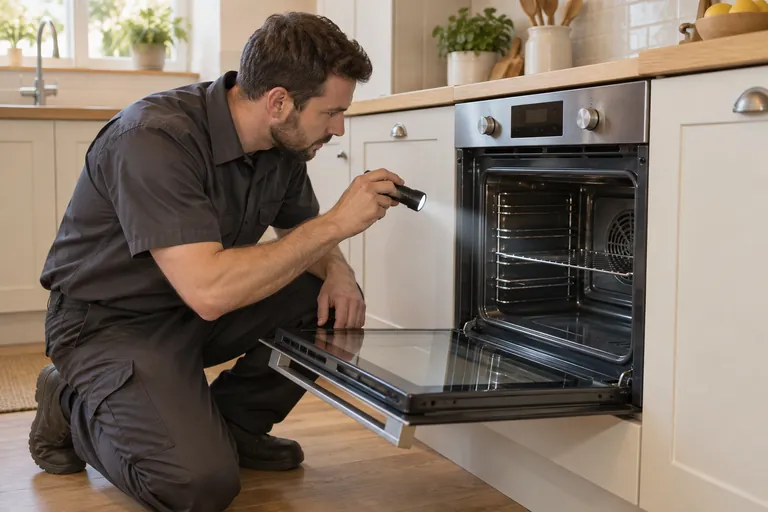
You preheat your oven, wait the usual time, but when you open the door, it's cold or barely warm. This frustrating scenario is incredibly common, and in most cases, the cause is simple: a failing or failed igniter. The good news is that oven igniters are relatively inexpensive parts, and replacing one is a straightforward repair that many homeowners can tackle themselves.
In this comprehensive guide, we'll explain how gas oven igniters work, help you diagnose whether yours has failed, walk you through testing procedures, and provide detailed step-by-step instructions for replacing the igniter yourself. We'll also help you decide when it makes sense to call a professional instead.
How Gas Oven Igniters Work
Understanding how the ignition system works helps you troubleshoot problems more effectively. Modern gas ovens use a "hot surface igniter" system (HSI), which is different from the standing pilot lights found in very old ovens or the electronic spark igniters used in gas cooktops.
The Hot Surface Igniter System
The hot surface igniter is typically made of silicon carbide or silicon nitride—materials that can withstand extreme heat while conducting electricity. When you turn on your oven, here's what happens:
- Power flows to the igniter: The control board sends electrical current to the igniter
- Igniter heats up: The igniter element resists the electrical current, causing it to heat to approximately 1,800-2,500°F and glow bright orange
- Current triggers gas valve: The igniter is wired in series with the gas valve. When the igniter draws sufficient current (typically 3.2-3.6 amps), this current flow triggers the gas safety valve to open
- Gas ignites: Gas flows from the burner, contacts the glowing hot igniter, and ignites
- Burner heats oven: The gas flame heats the oven to your set temperature
- Thermostat cycles: When temperature is reached, gas flow stops; when temperature drops, the cycle repeats
This design is a safety feature: gas can only flow when the igniter is hot enough to immediately ignite it, preventing dangerous gas buildup in the oven cavity.
Why Igniters Fail
Igniters are wear items—they're designed to heat to extreme temperatures thousands of times over their lifespan, and eventually they weaken. Common reasons for failure include:
- Normal wear: The heating element gradually degrades with use
- Cracking: Silicon carbide igniters can crack from repeated thermal cycling
- Electrical degradation: The igniter's resistance increases over time, reducing current draw
- Contamination: Grease, spills, or cleaning products can damage the igniter surface
- Physical damage: Bumping the igniter while cleaning or loading heavy pans
Signs Your Oven Igniter Is Failing
Before the igniter fails completely, it often shows warning signs. Recognizing these early can help you plan the replacement before you're left without an oven.
1. Slow Ignition
A healthy igniter should ignite the gas within 60-90 seconds of turning on the oven. If your oven is taking 2-3 minutes or longer to light, the igniter is weakening. It's still getting hot enough to eventually open the gas valve, but just barely.
2. Igniter Glows But Oven Doesn't Light
This is the classic weak igniter symptom. You can see the igniter glowing orange through the vent holes or by looking inside the oven, but gas never flows. The igniter is too weak to draw enough current to trigger the gas valve, even though it's still producing heat and glow.
3. Weak or Orange Glow Instead of Bright Orange-White
A strong, healthy igniter glows bright orange to nearly white when operating. If your igniter has a dim, dull orange color, it may be weakening. Compare the brightness to when the oven was new if you can remember.
4. Oven Doesn't Reach Temperature
If your oven takes much longer than usual to preheat, or food consistently takes longer to cook than recipes indicate, the igniter may be struggling. Each ignition cycle takes longer, so the oven can't maintain temperature as effectively.
5. Igniter Doesn't Glow at All
A completely dead igniter won't glow at all when the oven is turned on. However, this symptom can also indicate electrical supply problems, a faulty control board, or a broken wire, so further diagnosis is needed.
6. Gas Smell Without Ignition
Safety Warning: Gas Smell
If you smell gas when the oven won't light, turn off the oven immediately and ventilate the area. Do not attempt repairs until you've aired out the space. Persistent gas smell indicates a more serious problem—possibly a stuck-open gas valve—and requires professional service.
A slight gas odor just before ignition can be normal, but if you smell gas for extended periods without the oven lighting, there may be an issue with the ignition timing or a gas valve problem.
How to Test an Oven Igniter
There are several ways to test whether your igniter is the problem, from simple observation to precise multimeter testing.
Visual Test (No Tools Required)
- Remove the oven racks for a clear view
- Turn the oven to Bake at 350°F
- Look through the vents or open the oven door slightly to observe the igniter
- Watch for the igniter to glow and note how long it takes
- Observe if gas ignites within 60-90 seconds of the igniter glowing
Results interpretation:
- Igniter glows brightly and gas ignites quickly: Igniter is working (problem is elsewhere)
- Igniter glows but takes over 90 seconds to ignite: Igniter is weak, consider replacement
- Igniter glows but gas never ignites: Igniter is too weak, replacement needed
- Igniter doesn't glow at all: Igniter is dead OR there's an electrical problem
Amp Draw Test (Professional Method)
This is the most accurate test. A clamp-style amp meter measures the current the igniter draws. This test is performed while the igniter is powered, so it should only be done by those comfortable working around live circuits.
- Access the igniter wires (usually requires removing the oven floor panel)
- Clamp the amp meter around one of the igniter wires
- Turn on the oven and watch the amp reading as the igniter heats
Normal readings: Most igniters should draw 3.2-3.6 amps when hot. The exact specification varies by oven model and igniter type. If the igniter draws less than the minimum (typically under 3.0 amps), it's too weak to open the gas valve and needs replacement.
Resistance Test (Multimeter)
You can test an igniter's resistance with the oven unplugged and the igniter disconnected.
- Unplug the oven and turn off gas
- Access and disconnect the igniter
- Set your multimeter to measure resistance (ohms)
- Touch the probes to the igniter terminals
- Read the resistance value
| Igniter Type | Normal Resistance Range | Indicates Failure |
|---|---|---|
| Silicon Carbide (round, older style) | 50-400 ohms | Open (infinite) or under 40 ohms |
| Silicon Nitride (flat, newer style) | 40-200 ohms | Open (infinite) or significantly out of range |
Note: A resistance test can show an igniter is completely dead (open circuit) but may not identify a weak igniter that still has proper resistance but doesn't heat sufficiently. The amp draw test is more definitive for weak igniters.
Step-by-Step Oven Igniter Replacement
Replacing an oven igniter is a manageable DIY project. Most people can complete it in 30-45 minutes. Here's what you'll need and how to do it.
Tools and Materials Needed
- Replacement igniter (match to your oven model number)
- Phillips head screwdriver
- 1/4" nut driver or socket
- Work gloves
- Flashlight
- Multimeter (optional, for testing)
Getting the Right Igniter
Find your oven's model number (usually on a sticker inside the door frame or on the back of the unit) and order an igniter specifically for that model. Using the wrong igniter can result in improper gas valve operation. OEM (manufacturer) igniters typically cost more but ensure compatibility. Quality aftermarket igniters often work well and cost less.
Safety Precautions
Critical Safety Steps
- Turn off the gas: Locate the gas shut-off valve behind the oven and turn it perpendicular to the gas line
- Disconnect power: Unplug the oven or turn off its circuit breaker
- Wait for cool-down: If the oven was recently used, wait at least 30 minutes for it to cool
- Handle the new igniter carefully: The silicon carbide or silicon nitride element is fragile and can be damaged by oils from your hands; handle by the mounting bracket only
Replacement Procedure
Step 1: Access the Igniter
- Remove all oven racks and set aside
- Remove the oven floor panel (the flat metal piece at the bottom of the oven cavity). It usually lifts up at the back and slides out, or may have a few screws
- You'll now see the burner tube (the large tube with holes running front to back) and the igniter mounted beside it
Step 2: Remove the Old Igniter
- Locate the igniter—it's a rectangular or round ceramic device attached near the burner tube
- Trace the igniter wires back to their connection point. This is usually a plug connection under the oven floor or at the back of the oven
- If the connection is inside the oven cavity, disconnect it now
- Remove the screws (usually 2) that mount the igniter to the burner bracket
- If the wire connection is behind the oven or inside the main cabinet area:
- Carefully pull the igniter and wires through toward the oven cavity
- Alternatively, access from behind the oven
- Disconnect the wire harness plug if not already done
Step 3: Install the New Igniter
- Connect the new igniter's wire harness to the oven's wiring. The connection should only go one way—don't force it
- Position the igniter on the burner mounting bracket. The igniter element should be positioned close to the burner holes where gas will flow
- Install the mounting screws—snug them down but don't overtighten, as this can crack the igniter
- Route the wires away from any surfaces that get hot
Step 4: Reassemble and Test
- Replace the oven floor panel
- Replace the oven racks
- Reconnect the oven power
- Turn the gas supply back on
- Set the oven to Bake at 350°F and observe through the door or vents
- The new igniter should glow bright orange and the burner should ignite within 60-90 seconds
- Let the oven run for a full cycle to verify proper operation
Troubleshooting: What If the New Igniter Doesn't Work?
If you've installed a new igniter and the oven still won't heat, check these possibilities:
Igniter Glows But Still No Gas
- Gas valve issue: The gas safety valve may be faulty. This requires professional diagnosis and repair
- Wrong igniter: An igniter with the wrong amp draw rating won't trigger your oven's specific gas valve. Verify part number compatibility
- Wiring problem: Check that all connections are secure and wires aren't damaged
Igniter Doesn't Glow
- Wiring not connected: Double-check the wire harness connection
- Defective new igniter: Test the new igniter's resistance; it's possible (though rare) to receive a defective part
- Electrical supply issue: The control board, thermostat, or wiring may have failed. Use a multimeter to check for voltage at the igniter connection
- Control board fault: If there's no power to the igniter circuit, the electronic control board may need replacement
Igniter Works Initially Then Fails Again
If a new igniter works for a short time then fails, consider:
- Voltage issues: Improper voltage can damage igniters prematurely
- Poor quality part: Very cheap aftermarket igniters may have shorter lifespans
- Physical damage during installation: If the igniter was mishandled or touched on the element surface, it may fail early
Oven Igniter Replacement Costs
Understanding costs helps you decide between DIY and professional repair.
| Repair Option | Parts Cost | Labor Cost | Total |
|---|---|---|---|
| DIY Replacement (OEM igniter) | $50-$80 | $0 | $50-$80 |
| DIY Replacement (aftermarket) | $25-$50 | $0 | $25-$50 |
| Professional Repair (OEM) | $50-$80 | $100-$200 | $150-$280 |
| Professional Repair (aftermarket) | $25-$50 | $100-$200 | $125-$250 |
When to Call a Professional
While igniter replacement is DIY-friendly, some situations warrant professional service:
- Gas smell: Any persistent gas smell requires professional evaluation
- New igniter doesn't solve the problem: Other issues like gas valve failure or control board problems require expertise
- Oven under warranty: DIY repairs can void manufacturer warranties
- Discomfort with gas appliances: There's no shame in calling a pro if you're not confident
- Complex access: Some built-in ovens or ranges have difficult access that makes DIY challenging
Need Professional Oven Repair?
Our certified technicians can diagnose and repair oven ignition problems quickly, with most repairs completed in a single visit.
Call (437) 524-1053Same-day service available in the Greater Toronto Area
Maintaining Your Oven Igniter
While igniters are wear items that will eventually fail, you can help maximize their lifespan:
- Keep the oven clean: Spills and grease that contact the igniter can damage it
- Avoid harsh cleaners on the igniter: Don't spray oven cleaner directly on the igniter element
- Be careful with heavy pans: Don't slide heavy cookware across the oven floor where it might hit the igniter
- Address spills promptly: Clean up boil-overs before they can drip onto the igniter
Frequently Asked Questions
Common signs of a bad oven igniter include: the igniter glows but the oven doesn't light, the oven takes a long time (more than 60-90 seconds) to ignite, the igniter doesn't glow at all, or the oven heats unevenly or doesn't reach temperature. You can also test the igniter with a multimeter—a healthy igniter typically shows resistance between 40-400 ohms depending on the type.
The igniter part itself costs $40-$80 for most models. Professional installation typically adds $100-$200 for labor, making the total cost $150-$280. DIY replacement can save significantly on labor costs if you're comfortable working with gas appliances.
Yes, replacing an oven igniter is a manageable DIY project for most homeowners. It requires basic tools and about 30-45 minutes. However, you must be comfortable turning off gas supply and working with gas appliances. If you smell gas at any point, stop immediately and call a professional.
Oven igniters typically last 8-10 years under normal use, though this can vary. Heavy use, power surges, and moisture exposure can shorten lifespan. The igniter is a normal wear item that most ovens will need replaced at least once during their service life.
When an igniter glows but doesn't ignite, the igniter is too weak to open the gas valve. Oven igniter systems are designed so the igniter must draw sufficient electrical current (typically 3.2-3.6 amps) to trigger the gas valve to open. A weakened igniter may glow visibly but not draw enough current to open the gas valve, so no gas flows and ignition can't occur.
