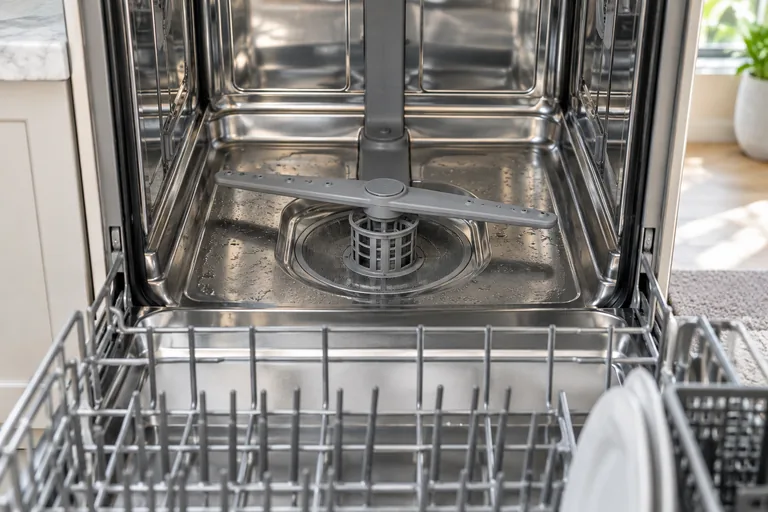

Standing water pooling at the bottom of your dishwasher after a cycle completes isn't just unsanitary—it signals drainage system problems that will worsen over time, potentially causing water damage to your kitchen floor and cabinet bases. Whether you're dealing with complete drainage failure, slow drainage, or intermittent issues, understanding the root causes and solutions will save you money and prevent costly repairs.
Understanding Dishwasher Drainage Systems
Modern dishwashers employ sophisticated drainage systems designed to efficiently remove 6-8 gallons of dirty water during each wash cycle. The system consists of several interconnected components, each critical to proper operation:
The Drain Pump: This electric pump, typically rated at 50-80 watts, forcefully expels water through the drain hose against gravity and any plumbing system backpressure. Most pumps operate at 3,000-3,600 RPM during drain cycles, generating enough force to push water up 6-8 feet vertically to reach kitchen sink drains.
The Filter Assembly: Located on the dishwasher floor beneath the lower spray arm, the filter system captures food particles, preventing them from clogging the drain pump or recirculating onto dishes. Modern filters use fine mesh screens capable of trapping particles as small as 0.5mm, requiring regular cleaning to maintain water flow capacity.
Drain Hose: This corrugated or smooth-bore rubber hose (typically 5/8" or 3/4" interior diameter) connects the drain pump to either a garbage disposal, air gap, or direct sink drain connection. Proper installation requires the hose to loop to counter height before descending to the drain connection, preventing backflow from sink drains.
Check Valve: Many dishwashers incorporate a one-way check valve preventing drain water from flowing back into the dishwasher tub. These spring-loaded valves can become stuck open or closed due to mineral deposits or debris accumulation.
Common Causes of Incomplete Drainage
1. Clogged or Dirty Filter Assembly
The filter assembly represents the first line of defense against debris entering the drain system, and consequently, the most common failure point. Studies show that 60% of dishwasher drainage problems stem directly from filter neglect.
How Filters Become Clogged: Each wash cycle introduces food particles, grease, soap residue, and mineral deposits into the water. While proper pre-rinsing removes large debris, microscopic particles accumulate in filter mesh over weeks of use. In Toronto's hard water environment (250-350 ppm), calcium and magnesium deposits cement food particles into solid masses that reduce filter capacity by 50-70%.
Signs of Filter Problems:
- Visible debris accumulation in the filter well
- 1-2 inches of standing water after cycles
- Decreased cleaning performance with spots or film on dishes
- Unpleasant odors emanating from the dishwasher
- Extended cycle times as the dishwasher struggles to circulate water
Proper Filter Maintenance: Remove the cylindrical filter by twisting counterclockwise (some models require lifting straight up). Separate the coarse filter from the fine mesh filter if your model has both components. Rinse under hot running water while scrubbing with a soft-bristled brush—never use abrasive pads that damage the mesh screen. For hard water buildup, soak filters in a solution of white vinegar and hot water (1:1 ratio) for 30-45 minutes, then scrub clean.
2. Drain Pump Failure
Drain pumps endure significant stress during their lifespan, activating multiple times per cycle and generating substantial mechanical force. Average pump lifespan ranges from 5-10 years depending on water quality, usage frequency, and maintenance practices.
Types of Pump Failures:
Complete Motor Failure: The pump motor winding burns out due to electrical problems, overheating, or age-related deterioration. Symptoms include complete silence during drain cycles or a burning smell during operation. Testing requires removing the pump and checking motor continuity with a multimeter—a functional motor shows 50-200 ohms resistance depending on model specifications.
Impeller Obstruction: The plastic impeller that propels water can become jammed by debris that bypasses the filter. Common culprits include toothpicks, fruit stickers, glass shards, and small bones. The pump motor hums loudly but water doesn't drain. Removing the pump and manually rotating the impeller identifies jams.
Worn Seals and Bearings: Pump seals prevent water from entering the motor housing while bearings support the impeller shaft. As seals wear, water infiltrates the motor, causing gradual performance degradation and eventual failure. Warning signs include wet motor housings, rust on pump components, and grinding noises during operation.
Hard Water Damage: In Toronto's hard water environment, mineral deposits accumulate on impeller blades and inside pump housings, reducing efficiency by 30-40%. The pump runs but can't generate sufficient pressure to expel all water. Professional descaling or pump replacement becomes necessary.
Safety Warning: Electrical Hazards
Disconnect Power Before Service: Always unplug the dishwasher or switch off the circuit breaker before accessing internal components. Dishwashers operate on 120V circuits capable of delivering lethal electrical shock.
Water and Electricity Don't Mix: Standing water in the dishwasher bottom can contact electrical components. Use towels to absorb water before working on pumps or motors.
Proper Reconnection: After repairs, ensure all wire connectors are fully seated and moisture-free before restoring power. Wet connections cause short circuits that damage control boards.
3. Drain Hose Problems
The drain hose serves as the critical link between the drain pump and household plumbing. Proper installation and maintenance prevent 90% of hose-related drainage issues.
Kinks and Compression: Drain hoses routed behind dishwashers can become kinked when units are pushed back against walls. Even partial kinks (30-40 degree bends) reduce water flow by 50-60%. Check hose routing before suspecting pump failure.
Internal Clogs: Grease and food particles accumulate inside drain hoses over years of use, gradually narrowing the passage. Remove the hose and inspect with a flashlight—clogs typically form at bends and connection points. Flush with hot water and dish soap, or replace if extensively clogged.
Improper Installation Height: Drain hoses must rise to counter height (typically 24-32 inches above the floor) before connecting to drain systems. This "high loop" prevents dirty sink water from flowing back into the dishwasher during drain events. Many installation problems stem from contractors skipping this critical step to save 5 minutes of labor.
Connection Point Blockages: Drain hoses connecting to garbage disposals require the disposal's knockout plug be removed during installation. If installers forget this step, water cannot drain. Similarly, air gap connections can clog with debris, requiring cleaning from the top.
4. Garbage Disposal and Drain System Issues
Dishwashers sharing drain lines with garbage disposals face unique challenges that cause drainage problems even when dishwasher components function perfectly.
Disposal Clogs: Food waste accumulating in garbage disposals blocks dishwasher drain hoses connected to disposal discharge openings. Running the disposal for 15-20 seconds before starting the dishwasher prevents most issues. If drainage problems occur mid-cycle, a disposal clog is likely.
Knockout Plug Presence: New garbage disposals ship with knockout plugs sealing the dishwasher drain connection. Installers must punch out this plug with a screwdriver and hammer, then retrieve the plug from inside the disposal. Failure to remove the plug completely blocks drainage—a mistake occurring in 5-10% of disposal installations.
Air Gap Blockages: Some jurisdictions require air gap devices mounted on sink decks. These prevent backflow by introducing a physical air gap in the drain line. The air gap's small orifices clog with debris, grease, and hard water deposits. Regular cleaning involves removing the chrome cap and clearing the plastic housing with a bottle brush.
Drain Line Blockages: Shared drain lines carrying waste from sinks, disposals, and dishwashers can develop clogs in the horizontal pipe runs beneath sinks. Professional drain cleaning services use augers or hydro-jetting to clear these blockages, typically costing $150-300.
5. Check Valve Malfunctions
Check valves (also called anti-siphon valves or backflow preventers) ensure water flows in only one direction—out of the dishwasher. These simple devices cause frustrating intermittent drainage problems when they fail.
Stuck Closed: The valve's flap or ball remains closed, blocking all drainage. Complete valve replacement is necessary—these components rarely respond to cleaning attempts.
Stuck Open: An open check valve allows drain water to flow back into the dishwasher tub after the pump stops. You hear the pump operating normally, but water remains after cycles. This problem often occurs alongside disposal backflow, making diagnosis challenging.
Partial Operation: Hard water deposits or debris prevent the valve from fully opening, restricting water flow by 30-50%. Drainage occurs but slowly, leaving 1-2 inches of standing water.
Water Supply Problems Affecting Drainage
While counter-intuitive, water supply issues can manifest as drainage problems. Understanding this connection prevents misdiagnosis and unnecessary repairs.
Inadequate Water Fill
Dishwashers require 2-3 gallons of water during fill cycles. If insufficient water enters due to inlet valve problems or low water pressure (below 20 PSI), the dishwasher may not generate enough water volume to activate proper drain cycles. Modern dishwashers use water level sensors that must detect adequate water before permitting drain functions.
Overfill Conditions
A stuck-open inlet valve causes continuous filling, overwhelming the drain pump's capacity. Water levels rise to the door bottom, triggering float switches that activate drain pumps continuously. This condition causes pump burnout within hours if not addressed. Testing requires observing the fill cycle—water should stop flowing within 2-3 minutes.
Hard Water Impact on All Systems
Toronto's water hardness (250-350 ppm) affects every aspect of dishwasher operation. Beyond drain pump impeller scaling discussed earlier, hard water causes:
- Inlet valve screen blockages reducing water pressure
- Spray arm port clogging reducing circulation effectiveness
- Heating element calcification reducing water temperature
- Sensor probe deposits causing incorrect water level readings
Comprehensive descaling every 3-4 months prevents most hard water problems. Use citric acid-based dishwasher cleaners according to package directions, running empty cycles at maximum temperature settings.
Step-by-Step Diagnostic Process
Professional Troubleshooting Sequence
Initial Assessment
Document standing water depth, whether the drain pump operates (listen for motor sounds), and if any error codes display on the control panel. Record when the problem started and whether it's constant or intermittent.
Filter Inspection and Cleaning
Remove and thoroughly clean the filter assembly. If the filter is heavily clogged, this likely solves the drainage issue. Test by running a rinse cycle and observing drainage.
Drain Pump Verification
With filter removed, observe the drain pump impeller during a drain cycle. The impeller should spin freely and forcefully expel water. Humming without spinning indicates jam or motor failure. No sound suggests electrical problems or complete motor failure.
Drain Hose Examination
Disconnect the drain hose from the disposal or sink drain. Inspect for kinks, verify proper high-loop installation, and check for internal blockages. Blow through the hose—airflow should be unrestricted.
Disposal and Drain System Check
Run the garbage disposal for 15-20 seconds. If water backs up through the dishwasher drain connection, the disposal is clogged. Check that the knockout plug was removed. Inspect the air gap if present.
Electrical and Control Testing
Use a multimeter to verify the drain pump receives 120V during drain cycles. Test pump motor resistance (50-200 ohms indicates functionality). Inspect wire connections for corrosion or looseness. Verify control board properly signals drain pump activation.
Professional Repair Solutions
While filter cleaning is DIY-friendly, many drainage problems require professional diagnosis and repair to ensure correct solutions and prevent repeated failures.
Drain Pump Replacement
Professional pump replacement typically requires 1-2 hours and costs $200-400 including parts and labor. Technicians verify correct pump specifications for your model, as using incorrect pumps causes immediate failures. After installation, technicians test multiple cycles to ensure proper operation and check for leaks.
Control Board Repairs
If the drain pump doesn't receive power during drain cycles despite functional components, control board problems are likely. Board replacement costs $250-450 depending on model complexity. Modern boards with digital displays and Wi-Fi connectivity cost more than basic mechanical timer models.
Drain System Modifications
Improperly installed drain hoses require modification to prevent recurring problems. Professional installations include:
- Installing a high loop mount bracket securing the hose to cabinet walls
- Replacing corrugated hoses with smooth-bore versions that resist clogging
- Adding or replacing air gaps when required by local plumbing codes
- Rerouting drain connections away from disposal units when possible
Preventative Maintenance Schedule
Weekly Tasks
- Scrape dishes thoroughly before loading, removing all visible food debris
- Run hot water at the sink for 30 seconds before starting the dishwasher, ensuring hot water reaches the unit immediately
- Inspect and wipe the door gasket, removing any trapped debris
Bi-Weekly Tasks
- Remove and clean the filter assembly thoroughly
- Wipe the door edges and filter well area, removing accumulated grease and grime
- Run a rinse cycle with one cup of white vinegar to dissolve mineral deposits
Monthly Tasks
- Run a complete cleaning cycle using commercial dishwasher cleaner or citric acid
- Inspect drain hose connections for leaks or looseness
- Clean the air gap if your installation includes one
- Run the garbage disposal with ice cubes to clean blades and discharge opening
Quarterly Tasks
- Deep clean spray arms, removing mineral deposits from spray ports
- Inspect door hinges and springs for proper operation
- Verify drain pump operation by running a test cycle and listening for normal operation
- Schedule professional maintenance if any abnormal sounds or performance issues occur
Cost Analysis: Repair vs. Replace
Determining whether to repair drainage problems or replace the entire dishwasher requires evaluating several factors:
Age Considerations
Dishwashers Under 5 Years: Always repair. Most components carry warranties, and modern dishwashers last 10-12 years with proper maintenance. Drainage repairs cost $150-400, while replacements require $500-1,200 investment plus installation.
Dishwashers 6-8 Years: Repair is usually economical unless multiple major components fail simultaneously. A $300 drain pump replacement on a 7-year-old unit provides 3-5 additional years of service.
Dishwashers Over 9 Years: Consider replacement if repair costs exceed $300-350. Older units lack modern efficiency features, using 30-40% more water and energy than current models. Annual operating cost savings of $40-60 offset replacement costs over 3-4 years.
Repair Cost Guidelines
| Issue | Typical Repair Cost | Time to Complete |
|---|---|---|
| Filter Cleaning | $0 (DIY) or $75-100 | 15-30 minutes |
| Drain Pump Replacement | $200-400 | 1-2 hours |
| Drain Hose Replacement | $125-200 | 45-60 minutes |
| Check Valve Replacement | $150-250 | 1 hour |
| Control Board Replacement | $250-450 | 1-2 hours |
| Professional Descaling | $100-175 | 1-1.5 hours |
Frequently Asked Questions
Why is there standing water in the bottom of my dishwasher?
Standing water indicates a drainage obstruction or pump failure. Common causes include clogged filters capturing food debris, kinked drain hoses restricting water flow, blocked air gaps allowing backflow, or failed drain pumps unable to expel water. Toronto's hard water exacerbates this by causing mineral deposits in drain components. First, check and clean the filter—80% of drainage issues stem from filter blockages requiring only 5 minutes to resolve.
How do I know if my dishwasher drain pump has failed?
A failing drain pump exhibits specific symptoms: humming or grinding noises during drain cycles, standing water after cycles complete, intermittent draining where some cycles work properly, or complete silence when the pump should activate. Testing requires removing the filter and observing the pump impeller during drain cycles. If the impeller doesn't spin or spins weakly, pump replacement is necessary. Professional diagnosis costs $75-100 and prevents misdiagnosis of simpler blockage issues.
Can hard water cause dishwasher drainage problems?
Yes, Toronto's hard water (250-350 ppm) significantly impacts drainage systems. Mineral deposits accumulate in drain pumps, reducing impeller efficiency by 30-40%. Scale buildup narrows drain hose interiors, restricting water flow. The drain valve can become partially blocked by calcification, preventing complete drainage. Monthly descaling treatments using citric acid or commercial descalers prevent these issues. Signs of hard water drainage problems include gradual worsening over months and white mineral residue in the sump area.
How often should I clean my dishwasher filter?
Dishwasher filters require weekly cleaning in homes with heavy usage (10+ loads weekly) or bi-weekly cleaning for moderate use (4-8 loads weekly). Remove the cylindrical filter from the dishwasher floor, rinse under hot water, and scrub with a soft brush to remove trapped food particles. Toronto's hard water demands monthly deep cleaning with white vinegar to dissolve mineral deposits. Neglected filters cause 60% of dishwasher drainage and cleaning performance issues, making this the single most important maintenance task.
What causes a dishwasher to drain slowly?
Slow drainage results from partial obstructions rather than complete blockages. Common causes include: accumulated grease coating drain components, partial filter clogs reducing water flow by 40-60%, drain hose installed below recommended minimum height creating siphoning issues, or aging drain pumps with reduced motor efficiency. Check the drain hose for proper installation—it should loop to counter height before connecting to disposal or drain pipe. If the hose sags below cabinet floor level, water must be pumped uphill, straining the pump and causing slow drainage.
Is it safe to use chemical drain cleaners in dishwashers?
Never use chemical drain cleaners (Drano, Liquid-Plumr) in dishwashers. These caustic chemicals damage rubber seals, plastic components, and metal pump housings, causing $300-600 in repair costs. Instead, use dishwasher-safe descaling products, white vinegar, or baking soda solutions. For stubborn clogs, manually remove the filter and clear debris by hand, or use a wet/dry vacuum to extract standing water and blockages. Professional drain clearing services cost $100-150 and safely resolve issues without component damage.
Conclusion: Maintaining Proper Drainage
Dishwasher drainage problems range from simple filter clogs requiring 5 minutes of DIY maintenance to complex pump failures demanding professional intervention. Understanding your dishwasher's drainage system, recognizing early warning signs, and implementing regular maintenance prevents 90% of drainage issues.
Toronto's hard water presents unique challenges requiring proactive descaling and filter maintenance beyond standard manufacturer recommendations. Monthly cleaning cycles with citric acid-based cleaners and bi-weekly filter cleaning prevent mineral accumulation that causes premature component failure.
When problems occur, systematic diagnosis starting with simple solutions (filter cleaning) and progressing to complex repairs (pump replacement) ensures cost-effective resolutions. Professional technicians provide accurate diagnosis, preventing unnecessary component replacement and ensuring repairs address root causes rather than symptoms.
With proper maintenance, modern dishwashers provide 10-12 years of reliable service without drainage issues. Investing 15-20 minutes monthly in preventative maintenance saves hundreds of dollars in repair costs and extends appliance lifespan significantly.
For more dishwasher maintenance and repair information, see our guides: Dishwasher Repair Toronto: Hard Water Solutions & Expert Service and Same-Day Appliance Repair Services Across the GTA.