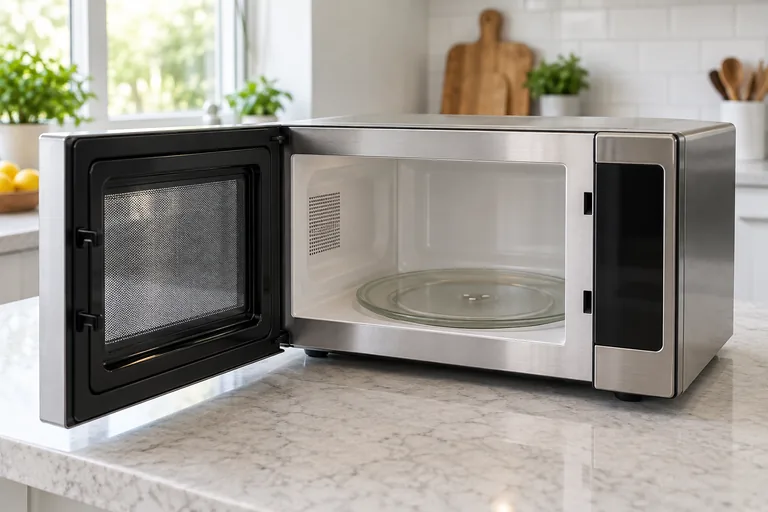

Microwave sparking is usually caused by a burnt waveguide cover, metallic items left inside, or a failing diode. Stop using it immediately — sparks can damage the magnetron or cause a fire. Unplug the appliance and call a technician before using it again. Need same-day help in Toronto? Call (437) 524-1053.
Sparking or arcing inside your microwave isn't just alarming—it's a critical safety hazard demanding immediate attention. Whether you've seen blue-white flashes, heard crackling sounds, or noticed burn marks on interior surfaces, understanding the causes, dangers, and proper response procedures can prevent fire damage, expensive repairs, or serious injury.
Understanding Microwave Technology and Why Sparking Occurs
Microwave ovens generate electromagnetic radiation at 2.45 gigahertz frequency, causing water molecules in food to vibrate and generate heat through friction. This process requires precise electrical components and careful material selection to contain microwave energy safely within the cooking cavity.
How Microwaves Generate Heat
The magnetron—a vacuum tube containing a heated cathode and surrounding anode—converts 120V AC household electricity into high-frequency microwaves. Operating at 4,000-5,000 volts provided by the high-voltage transformer and capacitor, the magnetron produces 600-1,200 watts of microwave energy depending on oven specifications.
These microwaves travel through a waveguide (rectangular metal channel) into the cooking cavity, where they're distributed by either a rotating antenna (stirrer) or turntable. The metal cavity reflects microwaves, creating standing wave patterns that concentrate energy in food rather than being absorbed by the cavity walls.
Why Metal Causes Sparking
Unlike food and liquids that absorb microwave energy, metals reflect nearly 100% of microwave radiation. When microwaves encounter metal objects—especially those with sharp edges or points—electromagnetic energy concentrates at these features, creating intense electrical fields.
If the electrical field strength exceeds air's dielectric breakdown threshold (approximately 3 million volts per meter), air molecules ionize, creating electrically conductive plasma that appears as bright sparks or arcs. These arcs reach temperatures of 5,000-10,000°F, sufficient to melt plastic, ignite food debris, or damage internal components.
Common Causes of Microwave Sparking
1. Metal Objects and Aluminum Foil
The most common sparking cause (40% of cases) involves inadvertent metal object placement. Common culprits include:
- Aluminum Foil: While small, smooth pieces may be safe under specific conditions, wrinkled or crumpled foil creates multiple sharp edges where electrical fields concentrate, causing immediate sparking.
- Metal Utensils: Forks, knives, spoons, or metal serving dishes reflect microwaves and create arcing, especially at tine tips or handle edges.
- Twist Ties and Staples: Bread bag ties or staples on takeout containers contain thin metal wires that heat rapidly and spark violently.
- Metallic Decorations: Plates or cups with metallic trim, gold or silver leaf decoration, or metal-containing glazes cause arcing where metal contacts food or other surfaces.
- Metal Racks: Improperly installed or damaged metal racks that contact cavity walls create electrical pathways causing sustained arcing.
Prevention: Always inspect containers and utensils before microwaving. Remove all metal objects, including hidden ones like staples in carton seams. Use only microwave-safe glass, ceramic, or plastic containers labeled as such.
2. Damaged Waveguide Cover
The waveguide cover (also called mica cover) represents the second most common sparking cause, accounting for 30% of arcing issues. This thin sheet—typically made from mica (a heat-resistant mineral) or heat-resistant plastic—covers the rectangular opening where microwaves enter the cavity from the waveguide.
Why Waveguide Covers Fail:
During normal operation, steam, grease vapors, and food particles contact the waveguide cover. Over months and years, moisture permeates the porous mica material, causing it to char, crack, or develop holes. Once compromised, microwaves arc directly to the metal waveguide and magnetron antenna behind the cover.
Warning Signs:
- Brown or black burn marks concentrated on one cavity wall (usually the right side)
- Holes, cracks, or brittle texture in the cover material
- Sparking that occurs in the same location regardless of food placement
- Burning smell from the microwave even without food
- Reduced heating efficiency as damaged areas reflect microwaves back toward the magnetron
Professional Repair: Waveguide cover replacement costs $100-150 including labor. Technicians must ensure the waveguide channel behind the cover is clean and undamaged. Failure to address waveguide damage promptly causes magnetron failure, increasing repair costs to $350-500.
3. Damaged Interior Paint or Coating
Microwave cavities feature special RF-transparent (radio frequency) paint that allows microwaves to pass through while protecting the metal cavity from rust and corrosion. When this coating chips, peels, or burns away, exposed metal creates arcing points.
Common Damage Locations:
- Door edges where closing impacts occur
- Cavity floor beneath the turntable support where food spills burn
- Ceiling where steam concentrates
- Side walls where containers contact during removal
Repair Considerations: Small paint chips (under 1/4 inch) can be repaired using microwave cavity paint available from appliance parts suppliers. Clean the area thoroughly, sand lightly, and apply thin paint coats according to manufacturer instructions. Extensive damage (over 1 square inch of exposed metal) often makes replacement more economical than repair.
4. Magnetron Antenna Cap Failure
The magnetron antenna—a metal probe extending from the magnetron into the waveguide—wears over time from the extreme electrical and thermal stresses of microwave generation. The antenna cap (a ceramic or specialized metal cover) can crack, allowing electrical discharge directly into the waveguide.
Symptoms of Magnetron Failure:
- Sparking visible through ventilation areas or waveguide cover
- Loud buzzing or humming sounds during operation
- Burning smell reminiscent of electrical fires
- Reduced heating power or complete heating failure
- Intermittent operation where the microwave works briefly then stops
Professional Diagnosis Required: Magnetron testing requires high-voltage meters and specialized knowledge. Attempting amateur diagnosis risks lethal capacitor discharge. Professional diagnosis costs $75-100, while magnetron replacement runs $250-400 including parts and labor.
5. Stirrer Cover Damage
Many microwaves use a rotating metal stirrer (also called a mode stirrer) instead of or in addition to a turntable. This fan-like device distributes microwaves throughout the cavity. The stirrer cover—a plastic dome protecting the stirrer motor and mechanism—can crack, melt, or accumulate debris.
Damaged stirrer covers expose metal components that arc when contacted by concentrated microwave energy. Symptoms include:
- Sparking from the cavity ceiling
- Uneven heating patterns
- Rattling sounds from the stirrer mechanism
- Visible cracks or melted areas on the plastic cover
6. High Voltage Diode Failure
The high-voltage diode works with the capacitor and transformer to convert 120V AC power into the 4,000-5,000V DC required by the magnetron. When diodes fail—typically from age-related deterioration or electrical surges—they can arc internally, causing visible sparking and burning smells.
Diode failure symptoms overlap with other issues, making professional diagnosis essential. Testing requires discharge of the high-voltage capacitor (which can store lethal charge for weeks after unplugging) and specialized equipment to verify proper voltage doubling operation.
Immediate Response to Microwave Sparking
Emergency Action Protocol
Stop Operation Immediately
Press the stop/cancel button the instant sparking begins. Do not open the door while sparking continues—allow all electrical activity to cease completely. Modern microwaves feature automatic shutoff sensors, but manual intervention ensures immediate power cutoff to the magnetron.
Unplug the Microwave
After sparking stops and the cavity appears safe, unplug the microwave from the wall outlet. If the plug is inaccessible behind cabinets, switch off the circuit breaker controlling the microwave circuit. This prevents accidental reactivation and ensures safety during inspection.
Allow Complete Cooling
Wait at least 30 minutes before opening the door or inspecting the interior. Arcing generates extreme temperatures that can cause burns. The magnetron and transformer remain dangerously hot for 20-30 minutes after operation ceases.
Inspect for Obvious Causes
Once cool, carefully check for metal objects, aluminum foil, or items with metallic decoration that may have caused sparking. If found, remove these items. However, do not attempt to clean or repair any internal damage—this requires professional service.
Do Not Resume Operation
Never attempt to use the microwave again until professional inspection confirms safety. Even if sparking was caused by a metal object you've removed, arcing may have damaged internal components that require replacement to prevent fire hazards or radiation leakage.
Schedule Professional Service
Contact certified appliance repair technicians immediately. Explain what occurred, when sparking started, and any unusual sounds or smells noticed. Emergency same-day service prevents further damage and ensures your family's safety.
Professional Diagnostic Process
Certified technicians follow systematic diagnostic procedures to identify sparking causes while maintaining safety protocols:
Visual Inspection
Technicians begin by examining the cavity interior under bright lighting, looking for:
- Burn patterns indicating arc locations
- Waveguide cover condition and damage
- Paint or coating deterioration
- Metal objects or residue
- Stirrer cover integrity
- Door seal condition and alignment
Electrical Testing
After confirming the high-voltage capacitor is properly discharged (using a specialized discharge tool), technicians test:
- Magnetron: Using current meters to measure filament and antenna current draw. Abnormal readings indicate magnetron deterioration or failure.
- High-Voltage Components: Testing the transformer, diode, and capacitor for proper voltage generation and rectification.
- Door Interlock Switches: Verifying all safety interlocks function correctly to prevent operation with an open door.
- Control Board: Checking for proper power delivery to the transformer and magnetron circuits.
Operational Testing
With repairs completed, technicians perform operational tests using water-filled cups to verify proper heating without sparking. Radiation leakage testing with specialized meters ensures the microwave operates within safe limits (under 5 milliwatts per square centimeter at 2 inches from the door).
When to Repair vs. Replace
Determining whether microwave repair makes financial sense requires evaluating age, repair costs, and replacement options:
Repair is Recommended When:
- The microwave is under 5 years old
- It's a high-end model ($500+) with advanced features
- Repair costs are under $200 (simple waveguide cover or paint touch-up)
- The unit is built-in or over-the-range, requiring expensive installation labor for replacement
- The microwave has sentimental value or matches kitchen design perfectly
Replacement is Recommended When:
- The microwave is over 8 years old
- Repair costs exceed $250-300
- Multiple components have failed (magnetron plus control board)
- Cavity damage is extensive (over 2 square inches of exposed metal)
- It's a basic countertop model where replacement costs only $100-200
- Modern energy-efficient models would provide long-term savings
Cost Comparison Table
| Issue | Typical Repair Cost | Worth Repairing If |
|---|---|---|
| Waveguide Cover | $100-150 | Under 7 years old |
| Paint Touch-Up | $75-125 | Under 8 years old |
| Stirrer Cover | $100-175 | Under 6 years old |
| Magnetron | $250-400 | Under 4 years or high-end model |
| High-Voltage Diode | $150-250 | Under 6 years old |
| Control Board | $200-350 | Under 5 years old |
Preventative Maintenance to Prevent Sparking
Daily Use Best Practices
- Inspect Before Use: Always check containers for metal objects, twist ties, staples, or metallic decoration before microwaving.
- Use Microwave-Safe Containers: Verify containers are labeled microwave-safe. When uncertain, use glass or ceramic without metal trim.
- Cover Food Properly: Use microwave-safe lids or wax paper to contain splatters. Avoid plastic wrap touching food, as hot spots can melt the plastic.
- Wipe Spills Immediately: Clean food splatters while the microwave is still warm (but not hot). Dried, carbonized food debris creates arcing sites.
Weekly Cleaning
- Clean the interior cavity with warm, soapy water or microwave-safe cleaners
- Wipe door seals and edges to remove food buildup
- Clean the turntable, support ring, and roller wheels
- Inspect the waveguide cover for discoloration or damage
Monthly Maintenance
- Deep clean with steam method: microwave a bowl of water with lemon slices for 5 minutes, then wipe interior surfaces
- Inspect interior paint for chips or peeling—address small areas immediately
- Check door alignment and seal integrity
- Verify the turntable rotates smoothly without wobbling
Myths and Misconceptions About Microwave Sparking
Myth: Small Sparks Are Normal
Reality: No sparking is normal in properly functioning microwaves. Even brief sparks indicate metal presence, damaged components, or coating deterioration requiring attention.
Myth: Running the Microwave Empty Causes Sparking
Reality: While running microwaves empty damages magnetrons (microwaves reflect back without food to absorb energy), it typically causes overheating rather than sparking. However, this practice ruins magnetrons quickly, causing expensive failures.
Myth: All Metal Causes Immediate Sparking
Reality: Smooth, flat metal surfaces (like the cavity walls) reflect microwaves without sparking. Problems occur at edges, points, and when metal objects are close together, creating electrical potential differences sufficient for arcing.
Myth: Microwave Sparking Causes Radiation Leakage
Reality: Internal sparking doesn't directly cause radiation leakage. However, the underlying damage (especially to door seals or hinges) can compromise the radiation containment system. Professional testing after sparking incidents ensures safety.
Frequently Asked Questions
Is it dangerous to use a microwave that's sparking?
Yes, continuing to operate a sparking microwave presents severe fire and electrical shock hazards. Sparks indicate electrical arcing—electricity jumping through air gaps—which generates temperatures exceeding 5,000°F. This can ignite food debris, melt plastic components, damage the magnetron (the most expensive component), or cause complete electrical failure. Immediately stop using the microwave, unplug it, and call professional repair services. Never ignore sparking—it always indicates a serious problem requiring expert diagnosis.
What causes sparks inside my microwave?
Sparking stems from several causes: metal objects or aluminum foil creating electrical pathways, damaged waveguide covers exposing metal surfaces, burned or deteriorated paint inside the cavity, food debris containing minerals that concentrate microwaves, failed magnetron antennas creating concentrated energy points, or damaged stirrer covers. The most common cause (60% of cases) is waveguide cover damage caused by steam and food splatter exposure. Professional diagnosis identifies the root cause and prevents misdiagnosis that leads to recurring problems.
Can I repair a microwave that sparks or should I replace it?
Repair decisions depend on age, cause, and cost. Simple waveguide cover replacement costs $100-150 and is worthwhile for microwaves under 5 years old. Magnetron replacement ($250-400) is economical for units under 3 years or high-end models. However, if the microwave is over 7 years old, replacement often makes more financial sense—new microwaves cost $100-300 for basic models and include modern safety features, sensor cooking, and improved energy efficiency. Never attempt DIY repairs on microwaves due to lethal high-voltage capacitors.
How do I know if my magnetron has failed?
Magnetron failure symptoms include: no heating even though the turntable rotates and lights work, loud buzzing or humming noises during operation, burning smell from the ventilation areas, intermittent heating where food heats inconsistently, or visible sparking from the waveguide area. Testing requires specialized high-voltage equipment and training—attempting amateur diagnosis risks 4,000-volt capacitor discharge causing instant death. Professional technicians use current meters and antenna burn pattern analysis to accurately diagnose magnetron failures within 15-20 minutes.
Why does metal cause sparking in microwaves?
Metal reflects microwaves rather than absorbing them like food and liquids. When microwaves encounter metal surfaces, especially edges or points (forks, aluminum foil edges, metal trim on plates), electromagnetic energy concentrates at these sharp features. This concentration creates electrical potential differences sufficient to ionize air molecules, producing visible sparks and extreme heat. Repeated arcing damages the microwave cavity coating, waveguide, and magnetron. Always use microwave-safe containers and remove all metal objects, including twist-ties, staples, and decorative metallic trim.
What is a waveguide cover and why does it fail?
The waveguide cover is a mica or plastic sheet covering the rectangular opening where microwaves enter the cooking cavity from the magnetron. It protects the magnetron and waveguide from steam, grease, and food particles. Failure occurs when steam permeates the cover, causing it to char and deteriorate. Once damaged, microwaves arc directly to exposed metal surfaces, creating sparks. Signs include: brown or black burn marks on the cover, holes or perforations, brittle texture, or visible sparking from that specific area. Replacement costs $100-150 and prevents $250-400 magnetron damage if addressed promptly.
Conclusion: Prioritizing Safety Above All
Microwave sparking represents a serious safety hazard that should never be ignored or treated casually. Unlike many appliance problems that develop gradually and allow time for diagnosis, sparking indicates immediate electrical danger requiring prompt professional attention.
Understanding the causes—from simple metal object placement to complex magnetron failures—helps you respond appropriately and avoid dangerous DIY repair attempts. The presence of high-voltage components storing lethal electrical charges makes microwave repair one of the few appliance categories where amateur work can literally prove fatal.
When sparking occurs, following the emergency response protocol (stop immediately, unplug, inspect for obvious causes, call professionals) protects your family's safety and prevents fire hazards. While simple issues like waveguide cover damage often justify professional repair costs, extensive damage or failures in older units typically favor replacement with modern, safer appliances.
Prevention through proper use, regular cleaning, and immediate attention to small paint chips or coating damage prevents most sparking issues. By respecting microwave technology's inherent hazards and seeking professional help when problems arise, you ensure your microwave serves your household safely for its intended 8-10 year lifespan.
For more information on microwave safety and repair, see our comprehensive guides: Microwave Repair Toronto: Expert Service & Safety Solutions and 24/7 Emergency Appliance Repair Services.